A remarkable international partnership between cultural institutions in China and the United States has breathed new life into an ancient masterpiece, yielding surprising historical discoveries thousands of miles away from its original home.
Unveiling the Secrets of the Medicine Buddha Mural
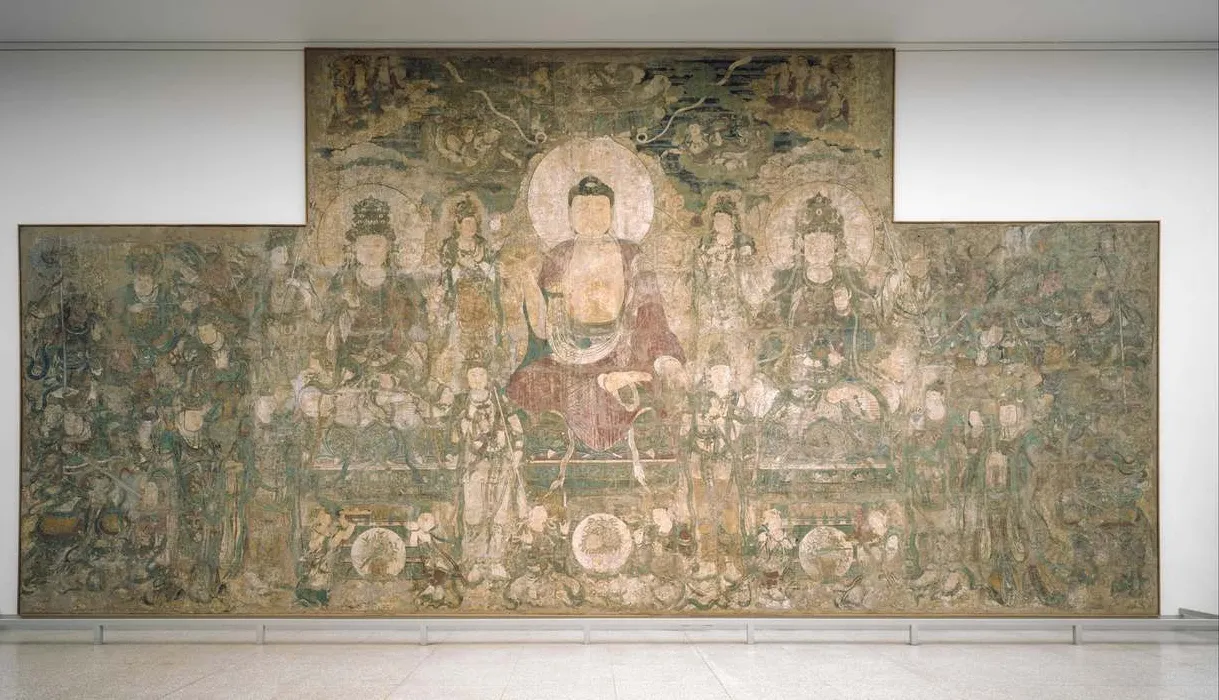
In the Chinese arts and antiquities gallery of the Metropolitan Museum of Art, a magnificent 50-foot-long mural commands the attention of everyone who enters the room. Depicting the Medicine Buddha and his attendants, the breathtaking artwork originally graced the walls of the ancient Guangsheng Temple in central China.
Dating back roughly 700 years to the Yuan Dynasty, the mural was painted on clay tiles mixed with rice straw. Unlike many historical artifacts, its journey to New York was not the result of looting; rather, impoverished monks at the temple sold sections of the mural decades ago to fund essential repairs for their collapsing roof. Eventually, the pieces found a permanent home at the Met through a 1965 donation.
Inspired by the mural's awe-inspiring energy, Zhang Jian—director of the Meticulous Painting Institute at the Chinese National Academy of Arts—embarked on a groundbreaking mission. Over the course of three years, Zhang led a dedicated team of special artists and conservationists to create a life-sized, exact replica that captures every single crack, faded contour, and historical repair.
A Historic Partnership in Art Conservation
This ambitious endeavor was made possible through an unprecedented collaboration with the Met, marking one of the highest-level cultural partnerships ever undertaken between Chinese and American institutions. Museum administrators enthusiastically supported the project, granting the team full authorization for detailed study and sharing ultra-high-resolution digital images.
To achieve absolute authenticity, the conservation team went to extraordinary lengths:
- Sourced clay-rich mud and rice straw from locations as close to the original Guangsheng Temple as possible.
- Meticulously studied medieval mineral pigments to understand how colors naturally shift and age over seven centuries.
- Utilized specialized hydraulic lifts and extensive lighting equipment directly inside the museum galleries to examine the finest details.
- Layered mud tiles to replicate not only the base-layer painting but also the unique scars left by time and previous interventions.
Rewriting History and Inspiring Future Collaboration
The exhaustive examination yielded profound historical insights. By analyzing the brushwork up close, Zhang's team discovered that conservators had previously misaligned the mural segments, leaving the Lord Buddha's head two centimeters off-kilter. Met curators expressed amazement at the finding, noting that the correction added immense practical and historical significance to the piece.
The stunning finished replica recently made its public debut in Beijing, celebrating the remarkable fruits of international cooperation and cultural preservation. With other sections of Guangsheng Temple murals residing in museums across Missouri and Cincinnati, this successful project has already inspired other institutions to reach out for collaborative examinations.
By bridging continents through shared heritage, this inspiring initiative ensures that ancient works of art continue to enrich contemporary cultural life and foster global friendship for generations to come.