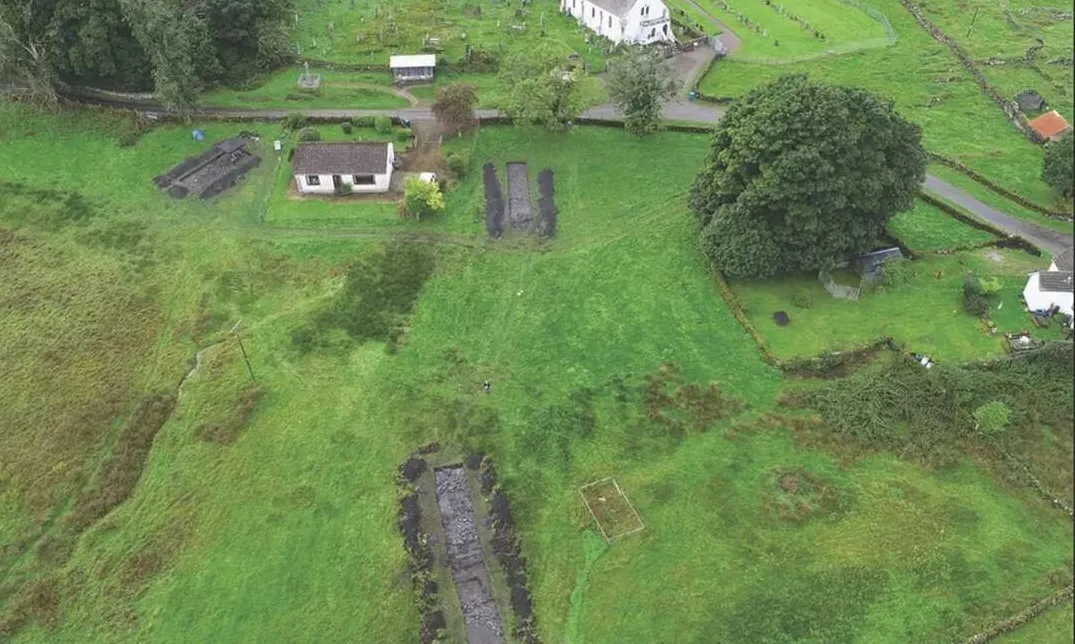
On the modest island of Lismore, nestled in Scotland’s Inner Hebrides, a small historical society has helped confirm the island’s place as one of the earliest centers of Christian evangelism in the British Isles. The discovery reshapes our understanding of early medieval monastic life, showing that even remote communities could become vibrant hubs of faith, craftsmanship, and learning.
Early Christian Roots of Lismore Island
Measuring just nine miles across, Lismore—historically known as Lios Mòr—has long been linked to the spread of Christianity across the Gaelic kingdom of Dál Riata. Contemporary to the famed monastery of Iona, Lios Mòr was reputedly founded in the 6th century by Saint Mo Luóc. While ancient texts and place‑name evidence hinted at its importance, concrete archaeological proof had remained elusive—until now.
Groundbreaking Discoveries Reveal a Thriving Monastic Hub
Guided by Dr. Clare Ellis of Argyll Archaeology, the Lismore Historical Society launched a community‑funded investigation of the island’s 13th‑century cathedral. Volunteers and residents, representing a sizable portion of the island’s 170 inhabitants, helped uncover three major finds that together confirm Lios Mòr’s status as an equal to Iona and a key node in early Northern European Christianity.
First, a series of six burials dating from 650 to 1040 CE were discovered alongside intricately carved stone cross fragments, indicating a long‑standing sacred burial ground. Second, archaeologists uncovered an oval‑shaped building with a limestone‑paved foundation, surrounded by evidence of high‑status craftwork, handmade pottery, and toolmaking—signs of a bustling workshop within the monastic enclosure. Finally, a trench yielded roughly 1,000 pieces of debris, including crucibles and metal casts, pointing to sophisticated precious‑metal production involving copper, silver, and gold.
These findings illustrate that Lismore was far more than a modest island church; it was a center where worship, education, and skilled artisanship intersected. The presence of both religious artifacts and secular items such as brooches suggests lively economic interaction between monastic and lay communities, echoing patterns seen in contemporary Irish monasteries.
Community‑Led Archaeology Inspires Future Research
Professor Gordon Noble of the University of Aberdeen, co‑author of the research paper published in *Antiquity*, emphasized the broader significance: “Lismore’s early monastery was known mainly from written records, but the excavations reveal a thriving center of worship, craftsmanship, and learning whose importance may rival the best‑known monasteries of early medieval Britain.”
Bob Hay, a former island resident who coordinated funding and volunteers, highlighted the power of local involvement: “The discoveries demonstrate the value of community‑led archaeology in advancing academic research. Local volunteers and the historical society played a central role in uncovering evidence that fundamentally changes our understanding of one of Scotland’s most important early Christian centers.”
- Archaeological evidence now confirms Lismore as a major early Christian monastery comparable to Iona.
- Findings include high‑status burials, craft workshops, and sophisticated precious‑metal production.
- Community fundraising and volunteer labor were crucial to the success of the excavation.
- The research reshapes narratives about monastic influence on early medieval trade and cultural exchange.