Most public spaces are designed for an "average" visitor who, in reality, does not exist. The lighting, ambient noise, floor textures, and pacing of a room often assume a specific type of body and brain, leaving individuals who experience the world differently to navigate discomfort on their own. April Surac, a Florida-based teenager and the founder of NeuraSensa, is challenging this norm. Over the past two years, she has pioneered a new approach to art and design: creating environments that adapt to the people using them, rather than forcing people to adapt to the environment.
Surac’s mission is rooted in a simple yet powerful philosophy: design should adapt to people, not the other way around. By integrating technology with textile art, she is building a bridge between creative expression and accessibility, ensuring that public and private spaces are welcoming to neurodivergent individuals, those with sensory processing differences, and people living with dementia.
From a Family Workshop to a Social Enterprise
April’s journey began in her family’s furniture workshop, where she learned early on that materials have their own logic. She observed that a texture one person finds soothing can be overwhelming to another. This insight was deeply personal; Surac grew up with a younger sister who has autism. Watching her sister navigate a world not built for her nervous system taught April, before she had the vocabulary for it, that the designed world fits some people far better than others.
Founded in June 2024, NeuraSensa emerged from this personal experience. Paul Moore, who has followed the project since its inception, notes that April’s work is driven by a profound sense of empathy. "April is one of those students whose work has grown directly out of something deeply personal to her," Moore said. What started as a teenager’s observation in a workshop has evolved into a structured organization dedicated to sensory-inclusive design.
Responsive Art That Reacts to Human Presence
NeuraSensa’s core offering consists of responsive textile installations. These are not static pieces of art; they are dynamic environments. By layering fabric with embedded sensors, the installations can shift under a visitor’s touch. The light, sound, and texture of the space change in real-time as people move through it.
For individuals whose senses register the world at different intensities, a space that responds rather than makes fixed demands can be the difference between staying and leaving. These installations are specifically designed for autistic people and others with sensory or cognitive differences. The impact has been significant:
- Community Reach: The installations have engaged more than 15,000 people through gallery exhibitions and community events, including shows at the SOBO Windermere Art Gallery and CityArts Orlando.
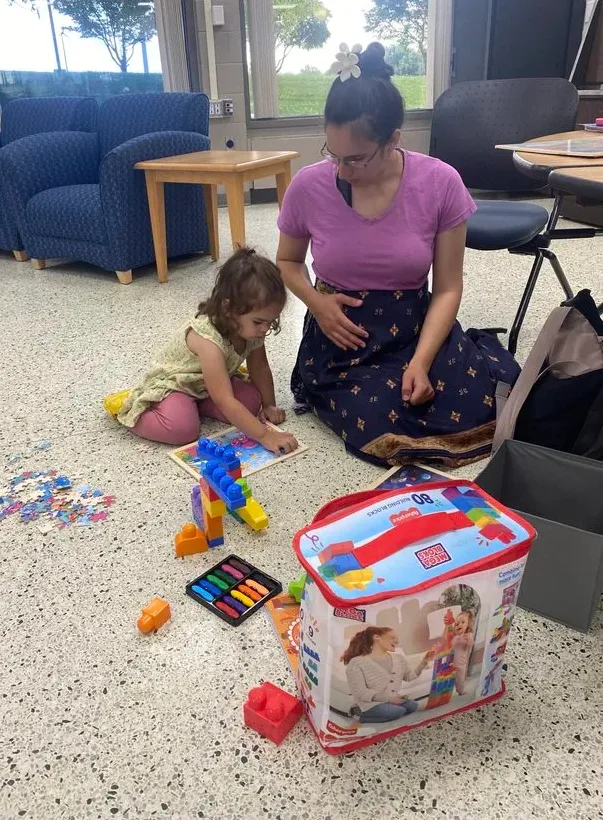
- Hands-On Workshops: NeuraSensa has partnered with organizations such as United Cerebral Palsy of Central Florida and the Brevard Achievement Center to provide hands-on workshops where participants interact with sensory-friendly pieces.
- Therapeutic Distribution: Through the 'Sponsor-a-Kit' program, NeuraSensa has distributed over 250 therapeutic kits to families, educators, hospitals, and disability-serving organizations, placing essential sensory support tools into environments that often lack them.
Surac’s commitment extends beyond exhibitions. She organized a community drive that delivered over $3,000 worth of tactile toys to Nemours Children’s Hospital in Orlando, ensuring that therapeutic resources reach young patients who need them most.
Award-Winning Innovation and Global Expansion
April’s dedication to inclusive design has earned her rapid recognition on both local and international stages. In 2025, she was named one of the 15 top winners of the Gloria Barron Prize for Young Heroes, receiving $10,000 to support her work and education. That same year, she was honored as a Daily Point of Light by the Points of Light organization and was nominated for the KidsRights international award.
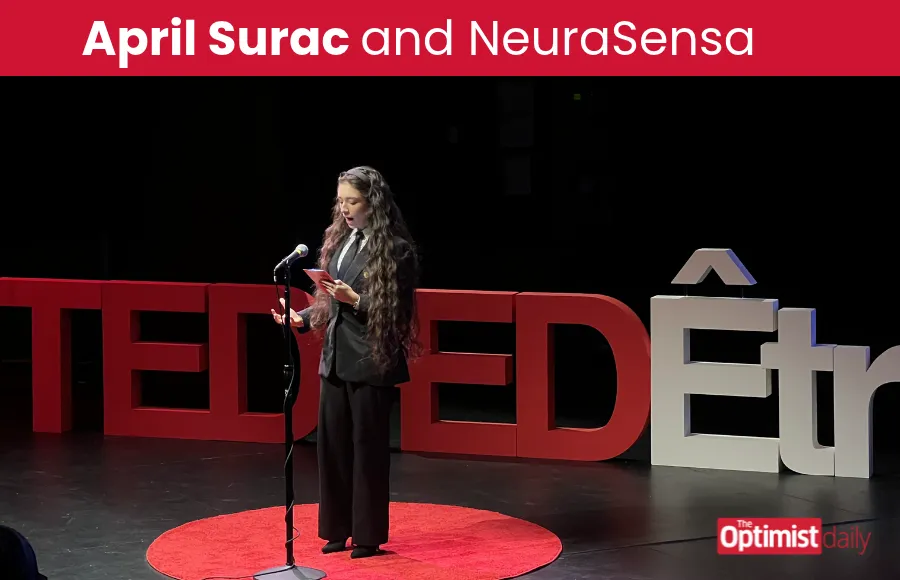
Her influence has also reached the academic and public speaking arenas. Surac has published research through Figshare and delivered a TED-Ed Talk titled "What's Next: Designing Technology for Every Nervous System." The talk, developed with mentorship from a Nobel laureate in neuroscience, outlines her vision for a future where technology is inherently inclusive.
"I've loved seeing her share each stage of that journey with me, and watching an idea close to her heart grow into work that has now supported thousands of people in our community," Moore said. "I am incredibly proud of how she keeps learning, expanding the project and finding new ways to use her talents in service of others."
Shifting the Paradigm: From Compliance to Design Justice
Historically, making public spaces accessible often meant meeting minimum legal requirements after a building or exhibit was already finished. This "retrofit" approach is slowly being replaced by the concept of design justice. This principle argues that spaces should be planned from the ground up to accommodate the full range of human experience, rather than being patched later for those who fall outside a narrow norm.
NeuraSensa sits at the intersection of art practice and disability advocacy. Surac has not waited for museums or city planners to adopt this new philosophy before acting on it. She is demonstrating that inclusive design is not just a compliance issue, but a creative opportunity that enriches the experience for everyone.
The next phase of NeuraSensa’s growth reaches well beyond Central Florida. April is currently developing commissions for galleries in New York City, Los Angeles, and London. She is also working on textile-based systems for large-scale installations and wearable sensory tools, with plans to move these designs toward patent protection.
As the project scales, the lesson from Surac’s family workshop travels with her: a room can be built to meet the person who walks into it. Whether that room is in a hospital, a school, or a gallery in London, the goal remains the same—to create spaces where every nervous system feels welcome.
- Key Takeaway: Inclusive design is not about adding accommodations to existing spaces, but about reimagining the space from the start.
- Key Takeaway: Technology and art can be combined to create environments that are responsive, calming, and accessible.
- Key Takeaway: Young changemakers are leading the charge in redefining how we interact with our physical environments.
Source: The Optimist Daily