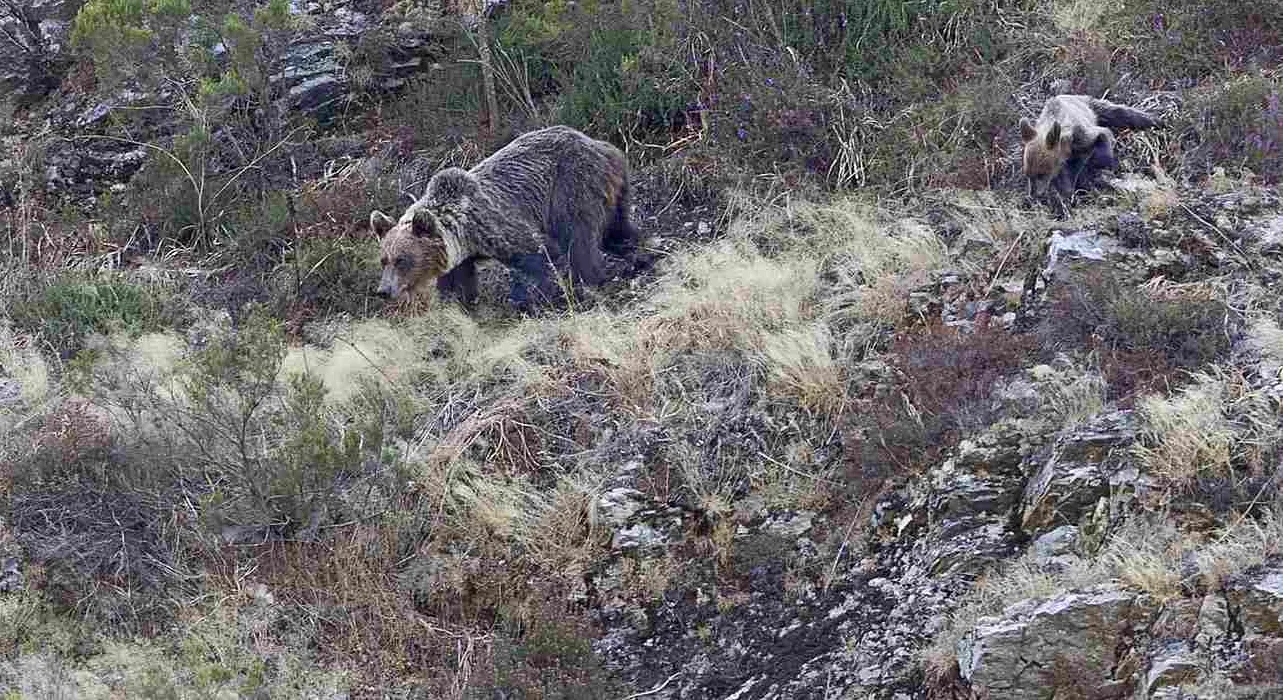
From the brink of near-extinction to roaming freely across 6,500 square miles of lush wilderness, populations of Cantabrian brown bears have officially doubled in Spain over the last 20 years, reaching an estimated 370 individuals. Numbering as few as 140 by estimates in the early 21st century, these magnificent animals represent another shining example of Spain’s ongoing success in protecting and reviving its incredible endemic wildlife.
Cantabrian Brown Bear Population Growth and Range Expansion
Taking its name from the far northern Spanish region whose rugged mountains stand as the bear’s historic redoubt, the Cantabrian brown bear can now be found across the regions of Asturias, Leon, Galicia, and Palencia, in addition to Cantabria itself. By naturally restricting the movement of animals, the Iberian Peninsula’s northern mountain ranges have historically fostered high rates of endemism in Spain and Portugal among iconic species such as the wolf, lynx, and bear.
Direct human persecution and the gradual conversion of wild habitats into agricultural land once severely impacted the brown bear population until they could only survive in isolated pockets of Cantabria. Yet, they tenaciously clung to existence until visionary conservation protections were established to give them a second wind.
Key Drivers of Wildlife Recovery
- Protected Natural Parks: The creation of Somiedo Natural Park and Redes National Park significantly expanded protected habitats around the last remaining bears.
- Stricter Penalties: Severe legal consequences, including fines up to $350,000 for unauthorized killing, provided robust deterrence against poaching.
- Rural Depopulation: Shifts in human demographics allowed traditional wilderness areas to slowly return to a more natural, undisturbed state.
- Proactive Government Measures: Continuous monitoring and dedicated conservation strategies enabled steady population resilience.
A Blueprint for European Wildlife Restoration
A comprehensive study published in Conservation Science and Practice highlights the remarkable survival and spread of Spain’s bears. Analyzing data across multiple decades, researchers observed an incredible 70% increase in bear numbers by the end of the 2012 study period. This period also witnessed breeding ranges expand by 30%, allowing Cantabria's two distinct breeding populations to finally reconnect after decades of separation.
As Europe's largest land carnivore, the brown bear plays an instrumental role in anchoring the ecosystem's food web. These animals perform vital ecological services by scavenging carrion to prevent disease and promoting plant biodiversity through seed dispersal. In a wonderful coincidence of nature, Spain's Iberian lynx population has experienced a similarly triumphant recovery over the past two decades, moving from critically endangered to vulnerable status.
Conservationists remain optimistic that with forward-thinking management plans and preemptive measures to prevent human-wildlife conflicts, these thriving populations will continue to flourish and expand into neighboring habitats.


Source: Good News Network