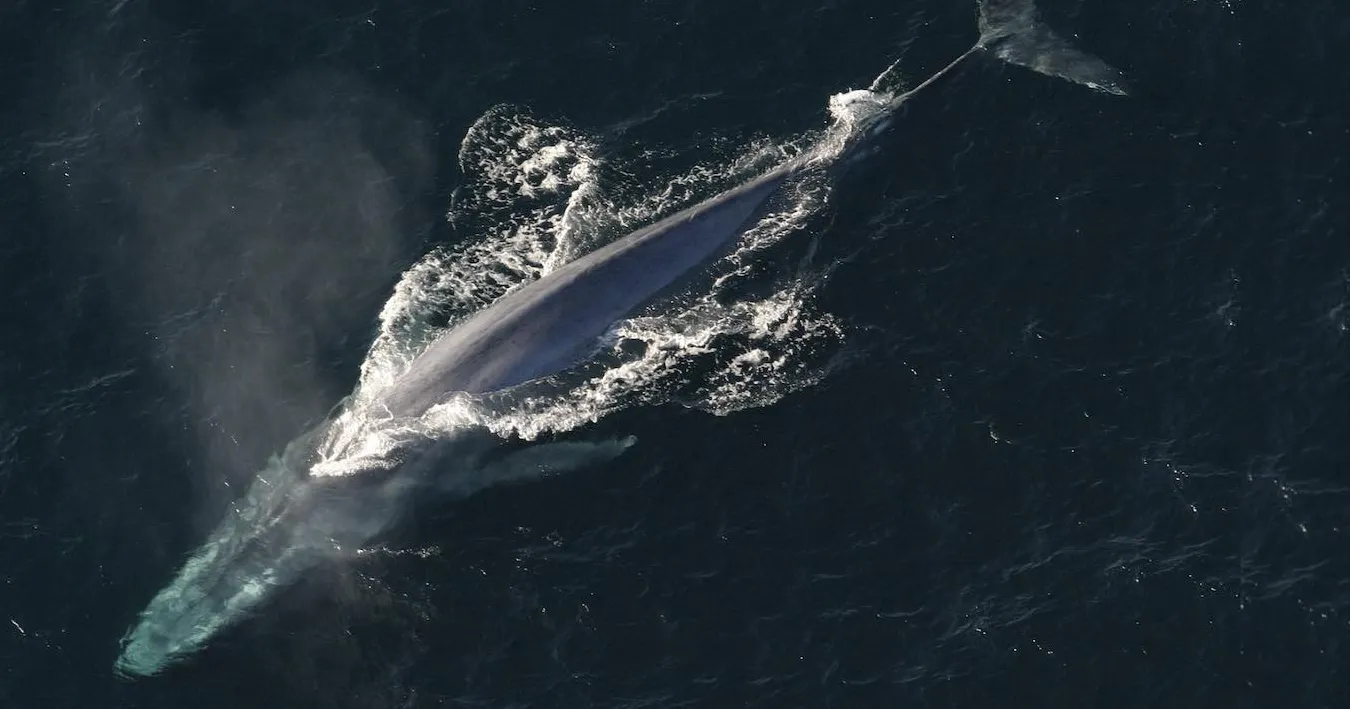
In a testament to the resilience of nature and the power of global conservation efforts, the population of Antarctic blue whales has experienced a remarkable resurgence. Since the definitive end of illegal whaling in 1973, these majestic giants have increased in number by an astonishing 1,000%. What began with a critically low count of just 418 individuals has grown to an estimated 4,018 whales, marking a recovery rate of approximately 4.5% per year. This statistical leap is not merely a number on a ledger; it represents a profound ecological shift, signaling that the Southern Ocean is beginning to heal from decades of industrial exploitation.
The Long Road to Recovery: From Harpoons to Hope
The journey to this recovery was neither quick nor easy. Although the International Whaling Commission (IWC) officially banned the killing of Antarctic blue whales in 1964, the threat did not disappear overnight. Illegal whaling operations persisted until 1973, keeping the population under immense pressure for nearly a decade after the legal ban. For an animal of such magnitude, survival is a slow process. Blue whales are the largest animals ever known to have existed, and their biology reflects this grandeur. They are long-lived but reproduce very slowly, typically producing only one calf every three years. This slow reproductive cycle means that every single birth is a vital contribution to the species' future, making the recent growth trajectory all the more impressive.
The fact that the population has reached over 4,000 individuals is a victory for international cooperation and marine protection laws. It demonstrates that when human activity is halted and habitats are protected, even the most vulnerable megafauna can bounce back. The recovery of the Antarctic blue whale serves as a powerful case study in conservation success, showing that the damage inflicted by industrial whaling is not necessarily permanent if given the time and space to recover.
Mastering the Data: How Scientists Count the Invisible
Estimating the population of an animal that spends the majority of its life submerged in the deep Southern Ocean is a formidable challenge. While satellites can track movements, they cannot easily count individuals beneath the waves. To overcome this, a team of researchers led by Zoe Rand, a postdoctoral scholar at the University of Washington School of Marine and Environmental Affairs, employed a sophisticated blend of historical analysis and modern fieldwork. Their study integrated three primary data sources: historical catch records, modern photo-identification archives, and decades of systematic field surveys.
The cornerstone of their current population estimate was the analysis of “line transect” surveys conducted between 1978 and 2004. During these expeditions, research vessels sailed along precise, straight-line paths across the Southern Ocean. Scientists aboard these vessels meticulously recorded every whale they spotted, noting the distance from the boat and the environmental conditions. By analyzing these sightings over multiple decades, researchers could model population trends with high accuracy. This method revealed not just that the population was growing, but that the growth had been substantial and consistent over time. The integration of photo-identification records further refined these estimates, allowing scientists to track individual whales across years and confirm their longevity and reproductive success.
- Historical Catch Data: Provided the baseline for pre-whaling and early post-ban population levels.
- Photo-Identification: Allowed for the tracking of individual whales, confirming survival and reproduction rates.
- Line Transect Surveys: Offered systematic, statistical sampling of the population across vast oceanic areas from 1978 to 2004.
This multidisciplinary approach highlights the importance of data science in modern conservation. It transforms scattered observations into a coherent narrative of recovery, providing the evidence needed to adjust conservation strategies and protect these animals for generations to come.
Ecosystem Engineers: The Ripple Effect of Blue Whale Biology
The return of the blue whale is significant not just for the species itself, but for the entire marine ecosystem. Blue whales are often described as “ecosystem engineers” because their biological processes drive nutrient cycles and support biodiversity on a massive scale. Their impact is felt from the surface of the ocean to the deep sea, influencing the health of countless other species.
During feeding, blue whales consume vast quantities of krill, which helps regulate prey populations. More importantly, their defecation plays a crucial role in ocean fertilization. When blue whales excrete, they release nutrient-rich waste that stimulates the growth of phytoplankton, the microscopic plants that form the base of the marine food web and absorb carbon dioxide from the atmosphere. This “whale pump” effect enhances primary productivity in the Southern Ocean, benefiting everything from small fish to seabirds.
Furthermore, the natural death of a blue whale creates a “marine snow” event. As a carcass sinks to the ocean floor, it provides a feast for deep-sea organisms, sustaining life in the abyssal zone for decades. Thousands of other creatures, from crustaceans to deep-sea fish, directly depend on the biological legacy of the blue whale. As Rand noted, the recovery of these animals means that these vital ecological services are being restored. The more blue whales there are, the more nutrients are cycled through the ocean, and the more resilient the entire ecosystem becomes against climate change and other stressors.
While the IUCN currently classifies blue whales as “Critically Endangered,” the trajectory of their recovery suggests that this status may soon be re-evaluated. Even though the population remains a fraction of its pre-whaling levels, the consistent growth rate indicates a healthy and expanding gene pool. This recovery story is a beacon of hope, illustrating that human-caused environmental damage can be reversed through dedicated conservation efforts. As the number of these gentle giants continues to climb, the Southern Ocean is not just witnessing a return of a species, but a restoration of balance.
Source: Good News Network