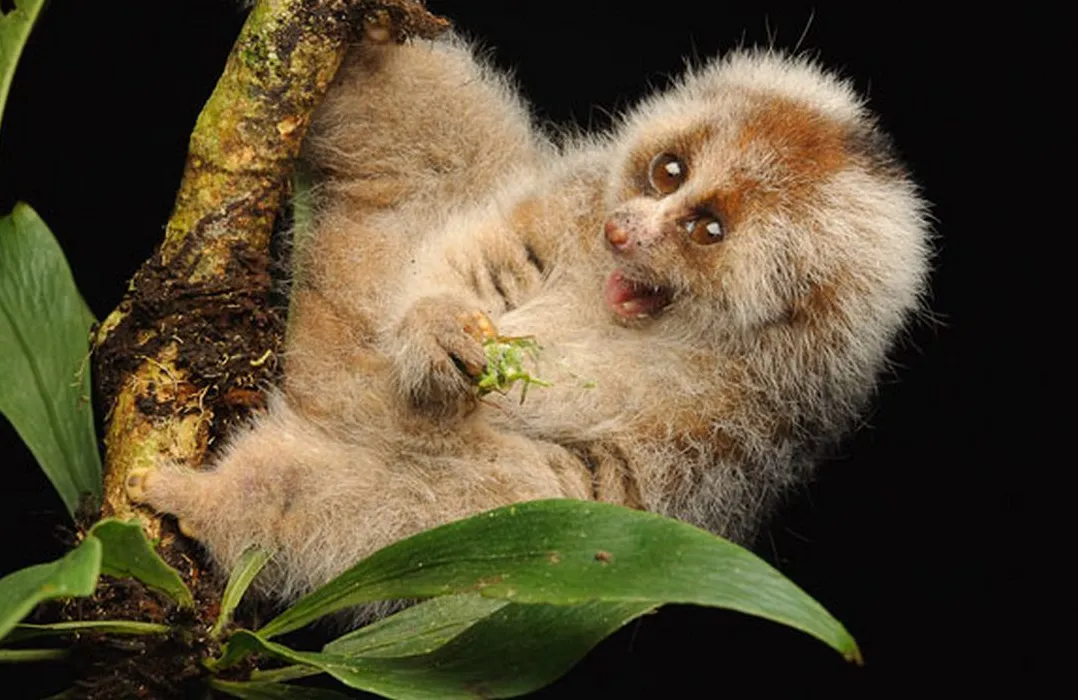
With its massive, expressive eyes and gentle demeanor, the Bangka slow loris is a creature that captures the imagination. Back in 2015, science feared this unique animal might be entirely extinct. However, recent discoveries have proven that this fascinating primate is still very much with us, thriving quietly thanks to the dedication of local conservation heroes on the island of Bangka who have been rescuing and returning them to the wild for years.
The Rediscovery of the Bangka Slow Loris
The last documented scientific sighting of a Bangka slow loris in Western records occurred way back in the 1930s. For nearly a century, the species slipped into mystery, officially categorized as "possibly extinct" by 2015. Yet, the dedicated grassroots efforts of local wildlife protectors were quietly keeping the species alive completely under the radar of international institutions.
A recent scientific paper detailed how researchers caught wind of the animal's survival. A 2022 field guide to the primates of Indonesia pointed toward the Gunung Maras National Park on Bangka Island as a habitat. Following this lead, scientists discovered records from a local wildlife rescue center, revealing that the animal had never truly vanished from its island home.
- Grassroots Impact: Between 2015 and 2025, local wildlife centers rescued more than 90 Bangka slow lorises.
- Successful Releases: Of those rescued, 86 healthy individuals were successfully rehabilitated and released back into the wild.
- Human-Wildlife Coexistence: Most rescues took place because the curious animals wandered into local gardens, plantations, or roads.
A Fascinating and Venomous Primate
Beyond its heartwarming survival story, the Bangka slow loris is one of the most remarkable animals on Earth due to a rare and formidable trait: it is one of the world's only venomous primates. While they are primarily omnivorous, these slow lorises possess specialized glands on their upper arms that secrete a powerful toxin.
When threatened, the loris licks these glands, mixing the secretion with its saliva to create a potent defensive bite. This cytotoxic venom rapidly damages cells and serves as a remarkable evolutionary safeguard. Sharing this unique trait with only a few close relatives, the Bangka slow loris is truly a biological marvel that deserves our utmost protection and admiration.
Local Knowledge and Global Conservation
Experts emphasize that this incredible rediscovery highlights the vital importance of community-led conservation. Scientists note that wildlife often survives not because of high-tech tracking, but because local communities, Indigenous peoples, and regional caretakers understand and protect the landscapes they share.
As we celebrate the continued existence of the Bangka slow loris, this uplifting story serves as a powerful reminder that nature still holds wonderful surprises. By bridging the gap between local dedication and global awareness, we can ensure that remarkable species continue to flourish in their natural habitats for generations to come.
Source: Good News Network