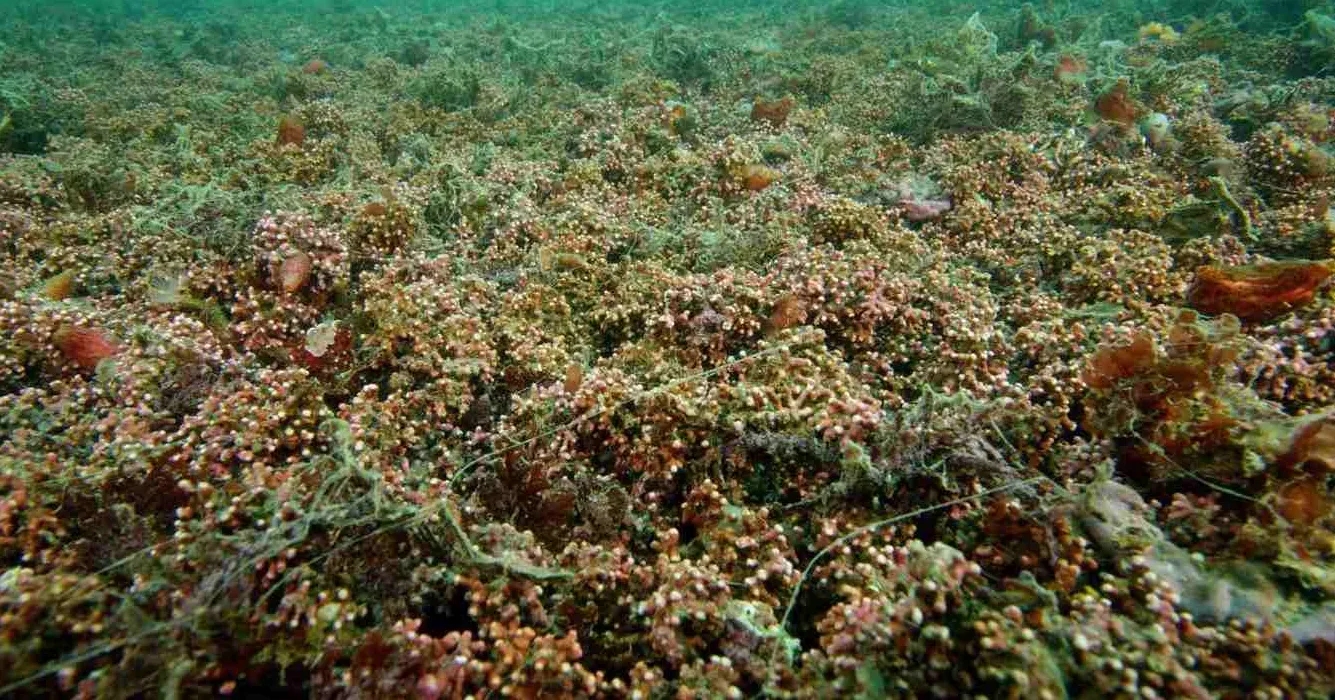
A decade after visionary conservation efforts led to a complete ban on industrial scallop dredging around Scotland's Summer Isles, the region's marine ecosystem is experiencing a remarkable rebirth. What was once a seabed threatened by heavy industrial fishing gear has transformed into a vibrant underwater paradise where marine life flourishes in abundance. At the heart of this extraordinary recovery is a rare and striking organism: a magenta-colored seaweed known as maerl.
Forming hard, chalky nodules that resemble delicate coral structures, maerl beds provide the essential foundation for a complex marine food web. Thanks to a 150,000-acre protected area off the northwest coast of Scotland, these ancient seabed formations—some of which have been growing continuously in the same location for over 9,000 years—are now safe. The return of healthy ocean habitats has sparked a dramatic resurgence in key fish stocks, alongside larger marine species such as whales, dolphins, and porpoises.
The Power of Maerl: Nature's Underwater Nursery
Maerl is far more than an unusual seaweed; it is a vital ecosystem architect. Over thousands of years, individual maerl nodules interlock to form vast underwater carpets and reef-like structures. Visually resembling pieces from an ancient game of knucklebones, these complex formations leave ample space between each nodule. This unique physical geometry allows water to circulate freely, delivering nutrients and oxygen to foundational microscopic species at the base of the marine food chain.
These thriving habitats serve as safe, nutrient-rich nurseries where countless marine animals can feed, shelter, and breed. Wildlife authorities estimate that Scotland is home to approximately 30 percent of all maerl beds in northwest Europe, representing the vast majority of the United Kingdom's total reserves. Before protective regulations were enacted, heavy metal dredging equipment posed an existential threat to these fragile habitats, with a single pass capable of crushing or burying up to 70 percent of the maerl in its path.
Key ecological benefits provided by protected maerl habitats include:
- Safe Nurseries: Shielding juvenile fish and shellfish from predators and physical disturbances.
- Enhanced Biodiversity: Supporting a dense web of marine organisms from plankton to apex predators.
- Natural Water Circulation: Interlocking nodule structures ensure optimal oxygen levels and nutrient distribution.
- Long-Term Ecosystem Stability: Preserving ancient seabed structures that have developed over thousands of years.
Community Grassroots Collaboration Protects the Seabed
The establishment of the marine protected area was forged through a dedicated coalition of local citizens, scientists, conservationists, and traditional fishermen. Recognizing that decades of unchecked industrial dredging were depleting scallop populations and destroying the ocean floor, local community members rallied together under the banner of sustainable ocean stewardship.
Among the key players in this effort was a local alliance working alongside traditional creel fishermen. Unlike industrial bottom trawling, creel fishing utilizes stationary pots to harvest seafood without scraping or damaging the underlying seabed. By uniting conservation goals with the livelihoods of small-scale fishermen, the community advocated for targeted restrictions that allowed marine life to recover while maintaining sustainable local industries.
The Spillover Effect: A Bright Future for Ocean Ecosystems
Ten years into the protection initiative, the transformation of the Summer Isles seabed is described by local divers and fishers as a total renewal. Scallop populations have staged an impressive recovery, proving that when marine ecosystems are given space to heal, nature responds with astonishing speed and resilience.
Furthermore, scientific research confirms that well-managed marine protected areas deliver benefits far beyond their physical borders. Known as the spillover effect, abundant fish populations within protected havens naturally expand into surrounding waters. In the Summer Isles, commercial fish species such as herring, cod, and haddock now breed peacefully within the protected maerl beds. As their numbers multiply, mature fish spill out into adjacent fishing zones, enriching regional fish stocks and providing economic stability for sustainable fishing communities.
The success of the Summer Isles stands as a shining blueprint for ocean conservation worldwide. By recognizing the invaluable role of unique habitats like maerl beds and empowering local communities to protect their coastal waters, humanity can rebuild thriving ocean ecosystems that sustain both marine wildlife and human coastal communities for generations to come.

Source: Good News Network