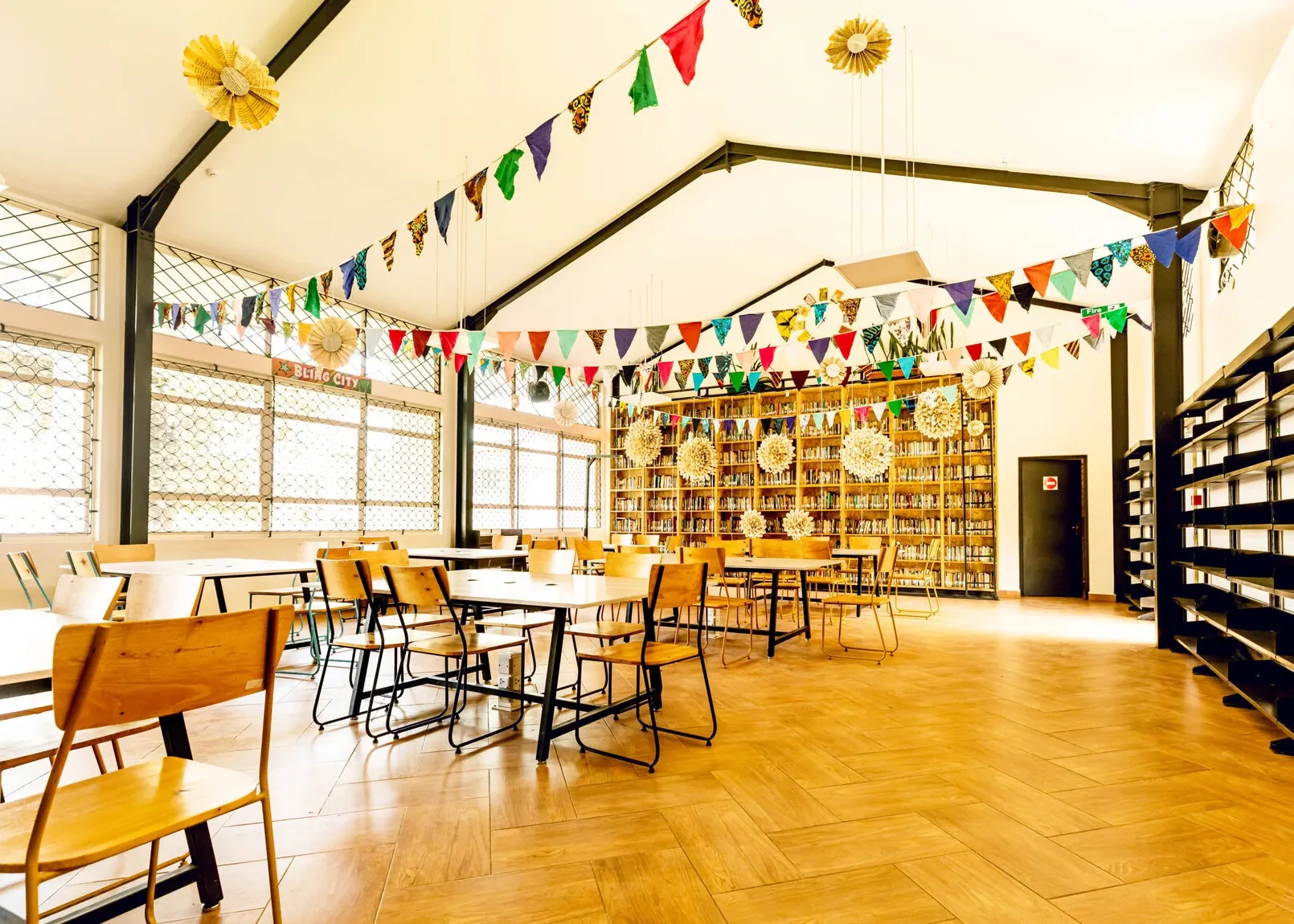
As Sunil Totti prepared for a job interview with an international tech firm recently, he was hit by a sudden anxiety: What if the electricity failed midway through? At home in Eastleigh, Nairobi, the power was notoriously unreliable. But that anxiety was quickly replaced by reassurance: “I know a place where I can go,” he realized. The nearby Eastlands Library offered free internet, computers, supportive fellow job seekers and a quiet space.
This moment crystallized what the library had become to Totti: dependable infrastructure for a career he was trying to build. The 26-year-old graduated in 2023, studying accounting initially and then turning to software development, with the aim of combining both disciplines in a career in fintech. He remembers the Eastlands Library from his younger days as a “very old and dusty place” that he would actively avoid. But for the last few years, he has spent eight or nine hours a day there throughout much of the week. “This is where I work, actually,” he says.
Revitalizing Nairobi Public Libraries
This is exactly the kind of transformation happening across Nairobi, where neglected municipal libraries are being reborn as dynamic civic centers. A dedicated nonprofit initiative launched in 2017 has successfully restored the Eastlands and Kaloleni libraries, with ongoing work at the city’s historic McMillan Memorial Library. The mission extends far beyond basic building refurbishment and replenishing bookshelves; the vision is to create a vibrant, free civic hub dedicated to work, study, lifelong learning, culture, and community connection.
The inspiring project began through happenstance when founders visited the McMillan branch for a literary event, only to discover crumbling walls and neglected spaces. Recognizing an urgent need, they expanded their efforts to address a deeper challenge: closing the gap on unequal access to knowledge, technology, and economic opportunity in the urban center.
Building Stronger Communities Through Public-Private Cooperation
The success of these revitalized spaces relies on a powerful collaborative model combining public ownership with nonprofit innovation. Local authorities maintain the physical structures and provide core personnel, while philanthropic fundraising, architectural restoration, and community programming breathe new life into the facilities.
- Free Access: Providing reliable internet, computers, and quiet study areas for job seekers and students.
- Skill Development: Hosting educational programs, digital literacy training, and cultural events.
- Community Empowerment: Transforming underused municipal spaces into safe, welcoming environments for all residents.
By turning forgotten reading rooms into bustling engines of opportunity, Nairobi is proving that investing in public infrastructure is one of the most powerful ways to support the aspirations of the next generation.