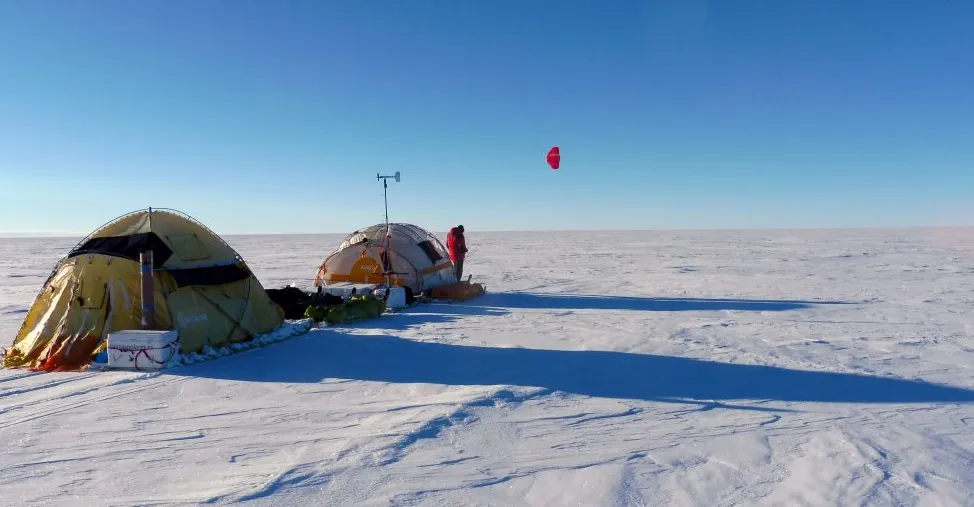
For the first time in decades, a team is crossing the interior of Antarctica without a single drop of fuel. The Wind Sled expedition, which departed Spain on October 18, relies entirely on wind and solar power to traverse 3,400 kilometers of ice, a feat that previously required roughly 170,000 liters (45,000 gallons) of diesel.
Wind Sled: 25 Years of Inuit-Inspired Design
Spanish polar explorer Ramón Larramendi has spent a quarter of a century refining a kite‑powered sled that blends traditional Inuit sled‑building techniques with modern engineering. The platform is 15 meters long, divided into four modular sections, and can carry up to 2,100 kilograms. For this journey, the sled is lighter, with only 250 kilograms of scientific instruments, allowing the crew to focus on research rather than logistics.
Equipped with 20 kites ranging from five to 150 square meters, the sled can reach speeds of 80 kilometers per hour in strong winds, with an average cruising speed of about 25 kilometers per hour. The combination of kite propulsion and solar panels means the sled operates with zero combustion, dramatically reducing its environmental footprint.
Research Across the Antarctic Interior
The route stretches from Russia’s Novolazarevskaya base in Queen Maud Land, through the remote Pole of Inaccessibility and near the Pole of Cold, to the Concordia research station at Dome C. Five temporary scientific stations will be established along the way to host 16 research projects selected by Spain’s polar research committee.
- Astrobiology and Salt Rocks – NASA’s Ames Research Center will investigate whether salt rocks on the surface could harbor microbial life by measuring temperature, humidity, and electrical conductivity.
- Ice Dynamics – The Dinglac project will use ground‑penetrating radar to map the top 10 meters of snow, tracking ice layer accumulation and shifts.
- Environmental Monitoring – Teams will sample for microplastics, chemical pollutants, microorganisms, and viruses, and assess the performance of the European Galileo navigation system.
Because satellites and permanent stations have limited reach into this interior, the data collected here will fill critical gaps in our understanding of Antarctic ecosystems and climate change.
Crew and Human Factors
All four members of the expedition are seasoned Antarctic veterans. In addition to Larramendi, the team includes polar guide and mountain technician Hilo Moreno, University of Maine researcher Mariusz Potocki, and documentary filmmaker Javier Selva, who previously crossed Antarctica with Larramendi in 2011‑2012.
They are also the subjects of the WindSled Mind project, led by Gabriel G. de la Torre of the University of Cádiz. Over the 85‑day journey, the project will monitor psychological responses, sleep patterns, and social dynamics, providing insights that could inform the planning of long‑duration space missions where small crews face confinement and extreme isolation.
A Repeatable Journey
Beyond the immediate scientific goals, the expedition is designed to be repeatable. Each return trip will allow researchers to compare data across seasons, tracking real changes in ice, climate, and polar ecosystems over time. When the team reaches Concordia, they will dismantle the sled and leave it ready for the next journey, ensuring that the knowledge gained can be built upon in future explorations.
By eliminating the need for fuel and harnessing the power of the wind, this expedition demonstrates how ancient design principles can meet modern scientific challenges, paving the way for sustainable exploration of the planet’s most remote frontiers.