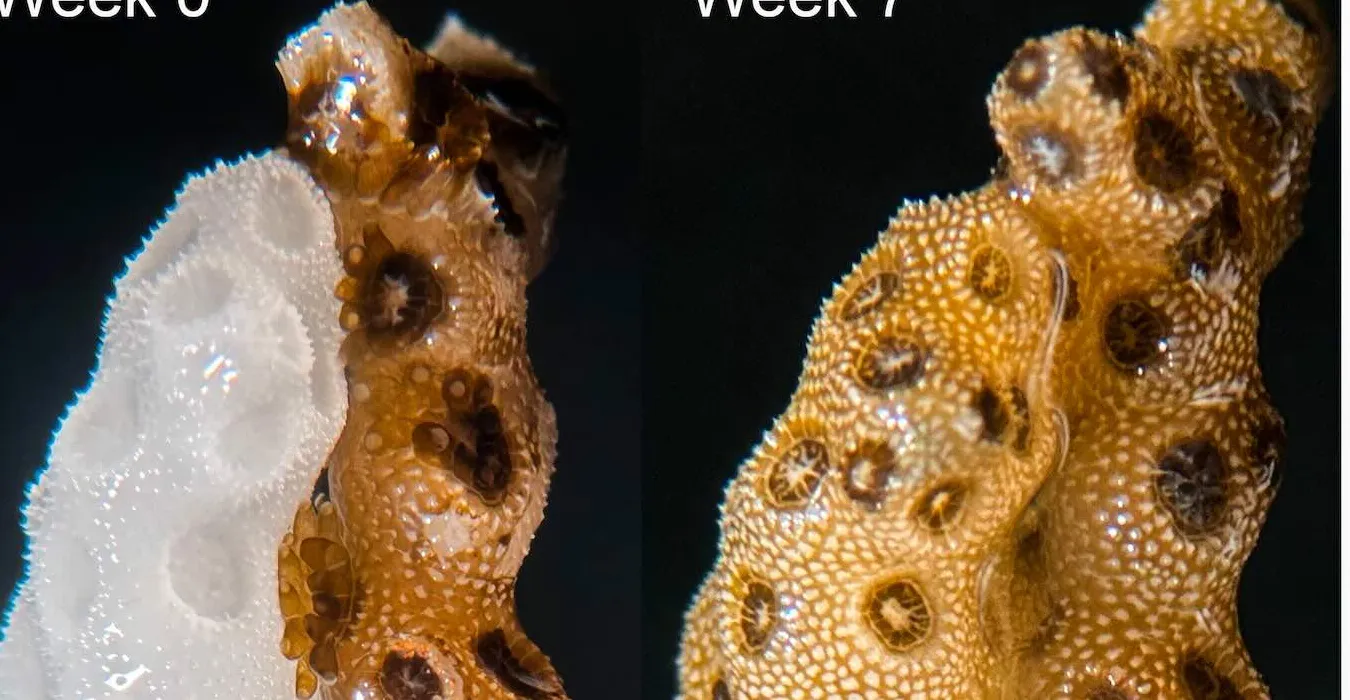
Coral bleaching has been reversed at record-breaking speed using an innovative method developed by researchers. Corals that were ghostly white and on the brink of death returned to full health in a laboratory setting in a mere seven weeks—marking the fastest documented recovery to date.
Published in the scientific journal Science Advances, this breakthrough offers fresh hope and opens exciting new possibilities for restoring marine ecosystems and coral reefs damaged by the intense heat of climate change.
Understanding Coral Bleaching and Natural Recovery
Coral reefs play a vital role in protecting coastlines and marine communities from storms and flooding. However, when ocean waters warm due to climate change, corals expel the beneficial algae living within their tissues. This loss leaves the corals pale, starving, and highly vulnerable to harmful invasions.
Despite the grim outlook often associated with bleached corals, lead study authors emphasize that these organisms are far from a lost cause. In a remarkable laboratory observation, scientists noticed that two coral fragments—one bleached and one healthy, sampled from the same colony—had accidentally tipped over and touched. Where they made contact, vibrant color and beneficial algae triumphantly returned to the bleached fragment.
- Tissue Fusion: Genetically identical corals recognize one another upon contact, fusing their tissues.
- Microscopic Pathways: Tiny channels align shortly after contact, creating a transport superhighway.
- Nutrient Sharing: Healthy corals share vital life-giving algae and nutrients, kickstarting recovery in as little as three to five days.
Accelerating Marine Restoration With Innovative Science
Following this accidental discovery, researchers tested different contact durations to understand how recovery rates are influenced. Remarkably, they found that after just five to seven days of contact, bleached fragments received enough beneficial algae to complete recovery entirely on their own, matching the recovery timeline of corals left in continuous contact.
Once introduced, the beneficial algae do not merely spread out—they multiply rapidly. During the second week of contact, algae within the recovering fragments doubled every four days, operating at roughly ten times the speed typically observed in wild corals.
Key Takeaways for the Future of Reefs
- Bleached corals can fully recover in just seven weeks following brief contact with healthy clones.
- Algae populations inside recovering corals multiply at unprecedented rates, supercharging natural healing.
- Future restoration efforts may utilize alternative delivery methods to share beneficial algae without requiring continuous physical contact.
As scientists continue exploring alternative ways to deliver beneficial algae and protect marine habitats, these profound insights into natural coral recovery provide immense optimism. By unlocking the innate regenerative potential of these essential marine animals, researchers are paving the way for accelerated and effective reef restoration worldwide.