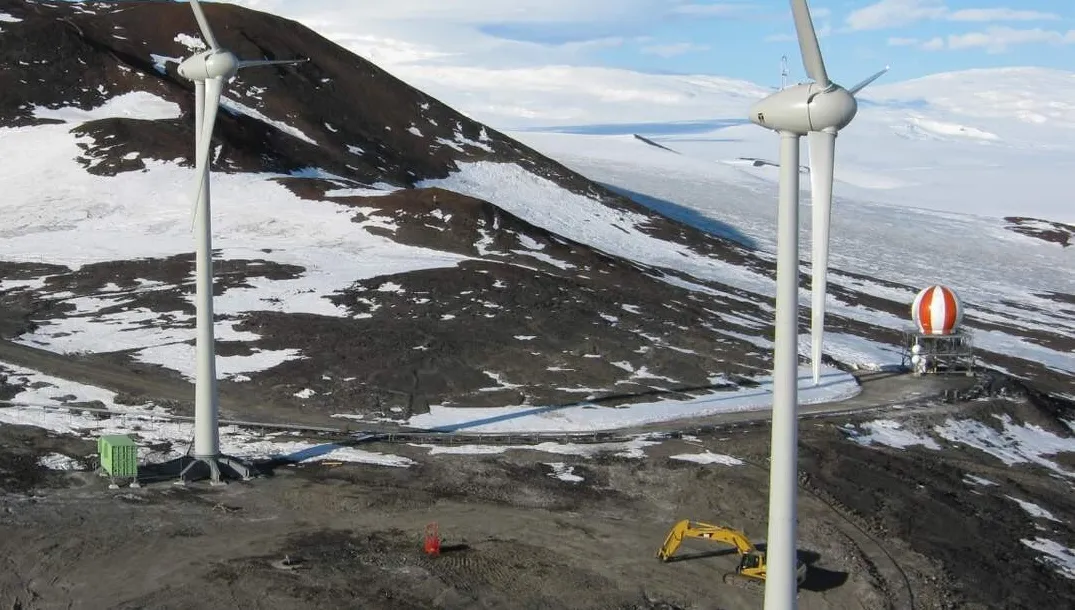
As they near the end of their remarkably productive operational cycle, the three wind turbines spinning on Antarctica’s Ross Island stand as a monumental testament to sustainable engineering. Built and commissioned between 2008 and 2009, the Ross Island Wind Farm overcame daunting technical hurdles to power vital scientific research while successfully mitigating roughly 122,000 gallons of diesel fuel consumption annually—drastically reducing the logistical burdens and costs associated with shipping heavy fuel to the polar region.
Engineering Resilience in Extreme Environments
Powering both America’s McMurdo Station and New Zealand’s Scott Base, this pioneering renewable installation has proved beyond a shadow of a doubt that clean energy technology can thrive even in the most unforgiving climates on Earth. Historically, diesel generation served as the sole energy source for these remote research hubs, draining valuable financial resources away from crucial scientific studies.
Designing machinery capable of enduring the long, punishing Antarctic winter required incredible innovation. Project managers utilized a novel design, bolting each turbine onto Crater Hill like a spider. Special sets of legs were drilled into precast concrete blocks, anchored securely into permafrost. To combat fearsome winds and freezing temperatures plunging to -30°C, the turbines were engineered to spin without gearboxes. This eliminated friction and oil viscosity issues while significantly reducing the number of moving parts.
Key Takeaways from the Ross Island Project
- Extreme Durability: Engineered specifically to withstand -30°C temperatures and relentless polar gales.
- Logistical Ingenuity: Component parts were sized to fit inside standard shipping containers, navigating strict transport limitations.
- Substantial Impact: Prevented approximately 1,200 tons of carbon dioxide emissions while saving thousands of gallons of diesel.
- Collaborative Future: Paving the way for upcoming power-sharing agreements between the US and New Zealand to upgrade systems by 2030.
Looking Forward to a Greener Horizon
Because transport vessels could only reach Ross Island during the brief Antarctic summer, every component had to be meticulously planned and sized to fit inside standard shipping containers. Despite these logistical constraints, the purpose-built Enercon E33 turbines have successfully delivered reliable clean energy for a decade and a half. While traditional diesel generation occasionally steps in during exceptionally calm conditions, the wind farm has dramatically transformed the local energy landscape.
As these trailblazing turbines approach the conclusion of their operational lifespan around 2030, exciting plans are already underway. Collaborating under an ongoing power-sharing agreement, teams have already begun laying foundations for larger, more powerful modern turbines paired with advanced battery storage systems. For the dedicated scientists studying the planet's changing climate from the edge of the world, this wind farm represents a profound victory: a cleaner, more sustainable way to power the very research designed to protect our global environment.