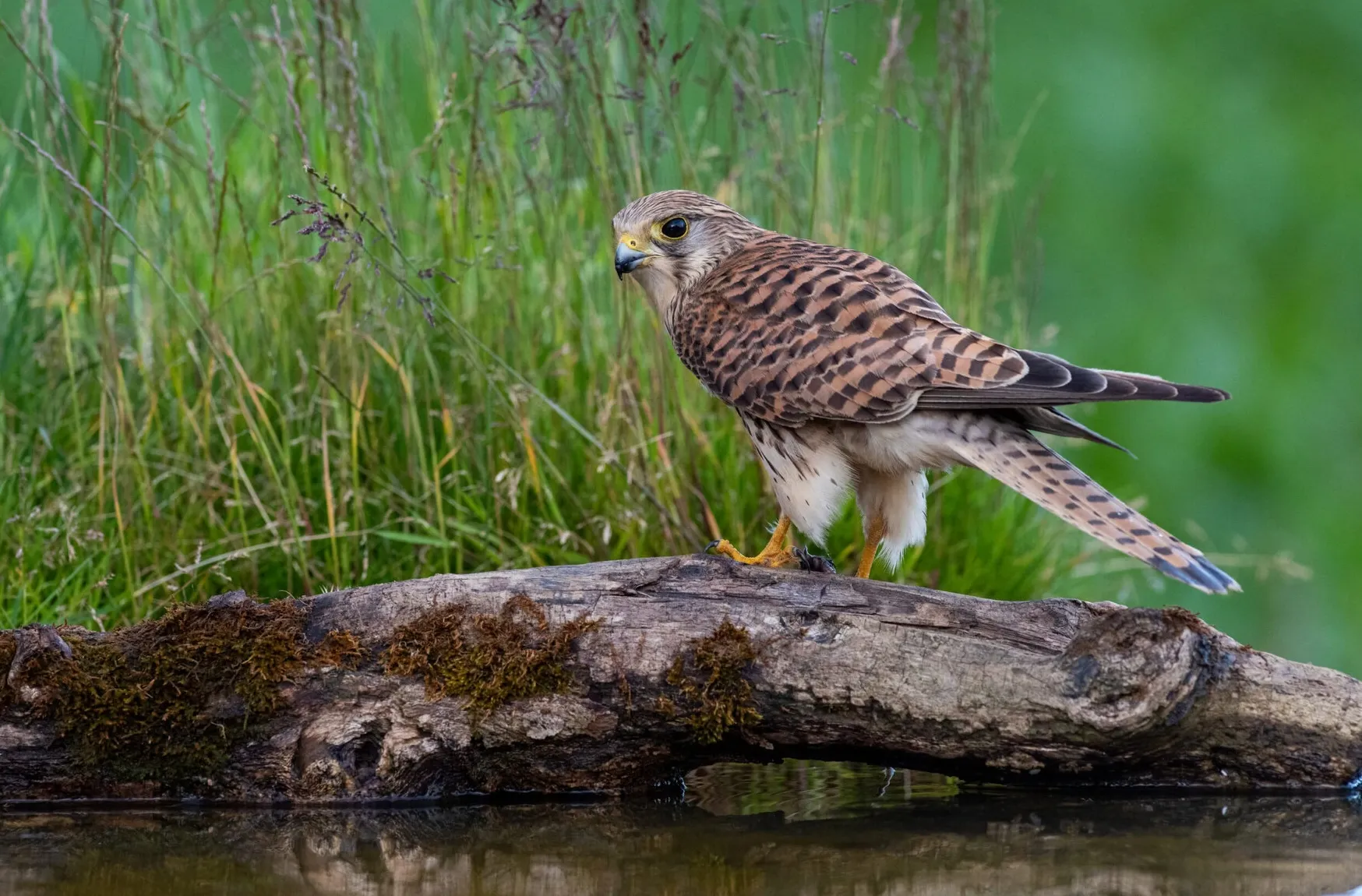
When Helen Lawy first imagined life as a kestrel, she pictured pure freedom. Hovering high above the rolling landscapes of Somerset in southwest England, the small falcon commands a sweeping panorama, equipped with an extraordinarily flexible neck and vision capable of tracking ultraviolet light. Yet, when Lawy took part in a pioneering project that asked humans to immerse themselves in the perspective of wild creatures, her romantic assumptions quickly dissolved into a profound realization of the daily challenges wildlife face.
Instead of endless open skies, Lawy began to see the landscape as a labyrinth of obstacles. To survive, a kestrel needs dense cover, quiet grasslands teeming with voles, and spaces undisturbed by constant foot traffic and domestic pets. As a volunteer steward helping care for the 65-acre Longrun Meadow along the River Tone, Lawy realized that areas designed to look neat, orderly, and picturesque to human visitors often present stark, inhospitable voids for the species trying to feed and raise their young there.
Stepping Into the Sensory Worlds of Wild Neighbors
Lawy’s experience was part of an imaginative initiative titled Risks Beyond Human Eyes, designed to challenge the traditional, human-centered approaches of environmental planning. Rather than assessing river basins and public parks solely through the lens of recreation, agriculture, or urban infrastructure, the project invited community participants to explore the landscape through the specific sensory needs of its wild inhabitants—from fierce otters and migrating salmon to stealthy red deer and subterranean earthworms.
Over several months, 18 local volunteers set aside their human habits to practice deep, disciplined observation along the River Tone catchment. Guided by specialized field prompts, participants attuned their senses to notice details routinely overlooked by human eyes:
- Focusing on Animal Senses: Participants observed surroundings through hyper-focused sight, low-frequency sound, or ground-level vantage points just centimeters above the earth.
- Identifying Unseen Pressures: Urban sprawl, ambient noise, artificial light, and domestic pet activity were newly understood as acute survival pressures rather than harmless background features.
- Uncovering Cumulative Barriers: Volunteers mapping river pathways discovered how hundreds of small weirs, culverts, and runoff zones compound into insurmountable obstacles for aquatic life.
- Resisting Human Assumptions: Observers practiced suspending immediate judgments, learning to document how an animal actually experiences space rather than how humans believe it should.
From Tidy Lawns to Flourishing Habitat Mosaics
This deliberate exercise in ecological empathy quickly generated tangible results on the ground. When Lawy returned to her local land management group at Longrun Meadow, her new perspective prompted an immediate shift in priorities. Previously, open meadows were mowed uniformly to maintain a tidy appearance, inadvertently stripping away the protective cover that small mammals and birds depend upon during hot, dry summers.
Instead of manicured expanses, Lawy proposed creating a dynamic "mosaic of habitats." She advocated for leaving wide, uncut buffer zones of tall grasses along the riverbanks and allowing hedgerows to flourish untouched as foraging corridors for bats and nesting birds. Much to her delight, the local committee embraced the proposals enthusiastically, recognizing that simple changes in stewardship could dramatically improve biodiversity without diminishing human enjoyment of the park.
The project also illuminated how overlapping environmental pressures create systemic stress. Studies show that kestrels nesting within 30 meters of busy roads experience elevated stress hormones that shift their biological energy from reproduction to basic survival. Along the River Tone and its tributaries, researchers cataloged over 330 man-made barriers spanning roughly 33 kilometers—pressures that become glaringly obvious the moment one attempts to trace the migratory journey of a salmon or an otter navigating just inches above the water line.
Recognizing Rights: Giving Rivers and Wildlife a Voice
The success of the River Tone experiment has rippled far beyond habitat mowing schedules. Inspired by the process of considering the ecosystem as a living collective, local leaders and community members collaborated to draft Somerset’s very first River Rights Charter. The landmark document formally recognizes the River Tone’s inherent right to flow naturally, regenerate its ecosystems, and remain protected from toxic agricultural runoff and industrial degradation.
This grassroots milestone mirrors a burgeoning global movement toward the Rights of Nature, a legal and cultural framework deeply rooted in Indigenous wisdom. From constitutional protections established for ecosystems in South America to legal personhood granted to rivers in New Zealand and North America, communities worldwide are discovering the power of legally recognizing nature’s voice.
While humans can never fully replicate the internal lives of other creatures, the act of making an imaginative, disciplined leap into their worlds bridges the gap between passive concern and active stewardship. By stepping outside our human-centric perspective, we unlock innovative solutions that foster resilience, heal fragmented habitats, and create shared landscapes where both people and wildlife can thrive together.
Source: Reasons to be Cheerful