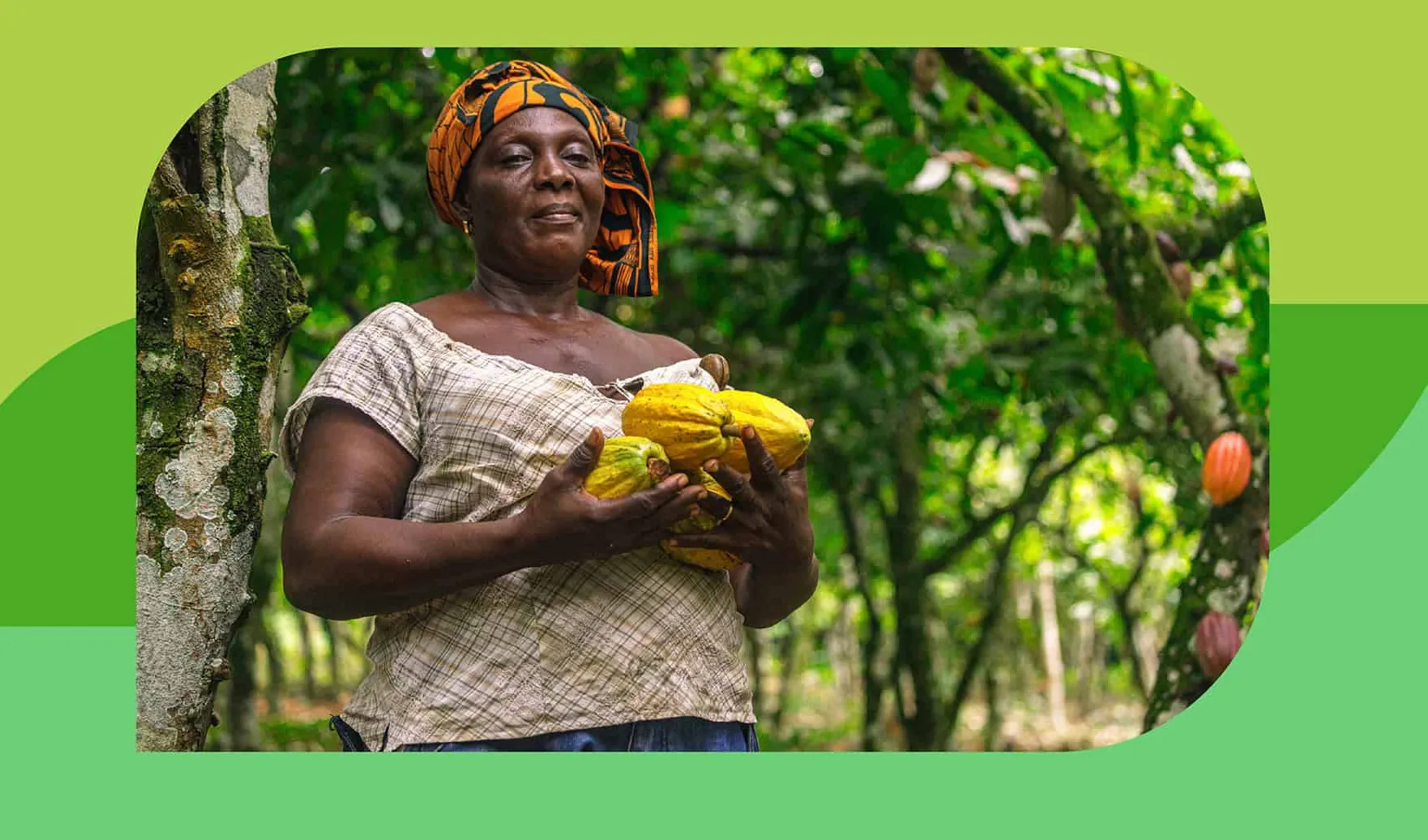
High on the hills of the Atewa Range in south-eastern Ghana lies a flourishing haven of tropical rainforest. A sanctuary for rare wildlife—including colobus monkeys, eagle owls, and the giant swallowtail butterfly—this lush ecosystem is also home to Susana Afrifa Ankrah, a cocoa farmer, mother, and grandmother who sees the natural world as the foundation of her community's well-being.
For Susana and her neighbors, the benefits of a thriving forest are felt every day. The canopy cools the soil, helps stabilize regional rainfall patterns, and nurtures the ground where crops grow. The forest also serves as a vital traditional pharmacy, supplying local herbal remedies for illnesses such as malaria. Rather than clearing this precious landscape, forward-thinking farmers like Susana are actively protecting it, proving that ecological preservation and thriving rural livelihoods can go hand in hand.
How Agroforestry and Shade-Grown Cocoa Revitalize Ghana’s Forests
Through innovative conservation initiatives that unite national forestry authorities and local agricultural bodies, farmers across critical intervention zones are receiving training in forest-friendly practices. While cocoa farming has historically placed pressure on tropical woodlands due to land expansion, modern agroforestry techniques offer an inspiring alternative by working with natural forest dynamics.
Because the cocoa plant naturally evolves as an understory species beneath larger trees, growing cocoa beneath a protective canopy creates healthier, more productive conditions. Farmers are moving away from traditional slash-and-burn methods in favor of holistic land management:
- Cultivating Under Natural Shade: Planting native trees, such as African mahogany, directly among cocoa plants shields crops from harsh sun and maintains critical moisture levels.
- Enriching Soil Health: Introducing organic composting and natural fertilizers enhances soil fertility and yields without depleting local resources.
- Planting Canopy-Adapted Varieties: Utilizing resilient hybrid seeds specifically developed to thrive beneath forested shelter belts ensures steady crop output.
- Preventing Deforestation: Cultivating more beans on existing land removes the economic pressure to clear standing forests.
By blending modern ecological knowledge with traditional stewardship, farmers report stronger plants and higher yields. As Susana notes, her crops flourish without direct sun exposure, producing high-quality harvests while keeping the ecosystem intact.
Empowering Communities Through Economic Diversification
True sustainability requires financial security. Conservation initiatives in the region have expanded beyond cocoa cultivation to provide equipment, tools, and business mentorship, allowing families to build multi-stream household incomes that are resilient against climate shifts.
Participants are encouraged to branch out into sustainable rural ventures, including beekeeping, raising snails, and farming diverse food crops like cassava, plantain, pawpaw, and peppers. For Susana, the economic transition has been transformative: her agricultural margins surged by an estimated 80 percent. With her increased profits, she established a local daycare nursery and a bakery, creating 17 new jobs in her community.
International conservation observers note that conservation efforts deliver their most durable successes when local communities actively guide decision-making. By consulting residents, honoring their rights, and centering local leadership, environmental projects gain genuine grassroots commitment that endures through changing seasons.
A Blueprint for Community-Led Climate Resilience Across Africa
The success unfolding in Ghana’s cocoa landscapes mirrors a growing movement of community-driven ecological stewardship across the African continent:
- Grassland Regeneration in Kenya: Pastoralist communities in Kajiado and Narok counties are restoring degraded rangelands through rainwater harvesting, native reseeding, and seed-banking businesses led by women.
- Tidal Mangrove Restoration in Senegal: Coastal stewards in the Saloum Delta are revitalizing natural tidal flows to support thriving mangroves, which protect shorelines from extreme weather and sustain local fisheries.
- Climate-Smart Farming in Zambia: Smallholder farmers in southern Zambia are adopting conservation agriculture combined with local savings groups and weather insurance to endure unpredictable droughts.
While challenges such as illicit mining and broader environmental pressures persist, the shift toward regenerative agroforestry provides immense hope. For Susana, the future of her farm is bright. Surrounded by children and grandchildren who actively participate in the harvest, she looks out at the green expanse with confidence, knowing that cultivating life under the canopy secures a sustainable heritage for the generations ahead.