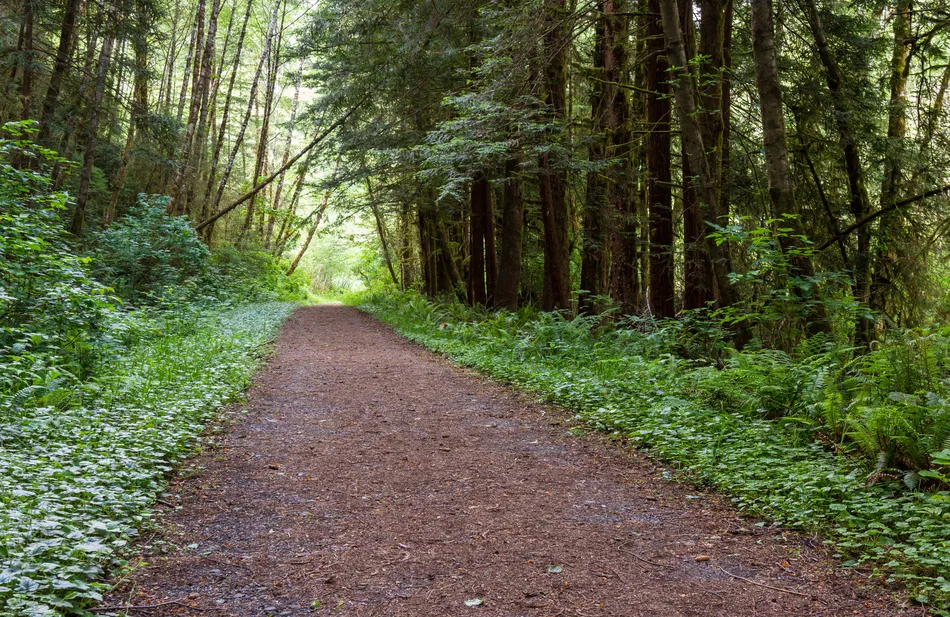
Think about the last time you went for a walk in the woods. Were you listening to a podcast? Checking your step count? Moving fast enough to feel productive, already running through everything you needed to do when you got home? If any of that sounds familiar, you were likely bringing your regular life into the forest with you, and wondering later why you didn’t come back feeling as restored as you’d hoped.
Forest bathing, known as Shinrin-yoku in Japan, invites a completely different approach. With less distance and zero agenda, the practice encourages you to slow down until your nervous system stops bracing for what comes next. The forest, which has been growing considerably longer than our busy schedules, offers a natural space to reset. For many, this intentional pause turns out to be precisely what they needed.
Inside Wisconsin’s First Certified Forest Bathing Trail
Eagle River, Wisconsin, is now home to the state’s first forest bathing trail certified by the Association of Nature and Forest Therapy Guides and Programs, joining a select group of roughly 50 certified trails worldwide. The Tara Lila Forest Bathing Trail is a welcoming one-mile gravel path located just a ten-minute drive from downtown Eagle River on the Trees for Tomorrow campus. Nestled within a stunning stand of towering aspens, the trail is open for both guided sessions and peaceful solo walks.
The practice was originally developed in 1982 by Tomohide Akiyama in Japan to combat rising rates of stress-related depression during rapid urbanization. The core concept is simple: spend time in nature not by powering through on a mission, but by genuinely inhabiting the space. Moving slowly enough to catch the temperature of the air, the scent of moss, and the deep quiet beneath a canopy brings remarkable wellness benefits. Scientific studies consistently show that forest bathing measurably reduces blood pressure and cortisol levels while improving sleep.
Certified forest therapy guide Cindy Conlon refers to the resulting state as “alert relaxation”—being calm and awake at the same time. On the Tara Lila trail, Conlon gently gathers groups in a circle for grounding breaths before the walk begins. The path features nine intentional stopping points, each equipped with invitation cards that encourage visitors to pause and notice sounds, smells, textures, and the surrounding stillness.
Connecting With Nature and Finding Personal Balance
Visitors from all walks of life are discovering profound benefits on the trail:
- Nervous System Recovery: For individuals recovering from health events or managing sensory overload from crowds and noise, the woods provide a reliable and gentle way to restore inner balance.
- Escaping the Daily Grind: Retirees and busy professionals alike find sanctuary in the profound quiet, stepping away from the loud hum of machinery, traffic, and endless to-do lists.
- Reclaiming Personal Time: The experience often serves as a joyful reminder that taking even 30 minutes for intentional downtime is a healthy, grounding act of self-care rather than something selfish.
How to Try Forest Bathing on Your Next Walk
Fortunately, you do not need a specialized or certified trail to experience the benefits of forest bathing. You can easily practice mindfulness in nature close to home by following a few simple steps:
- Leave your headphones and fitness trackers at home.
- Dedicate at least 20 minutes to walking somewhere with trees, keeping your destination flexible.
- Soften your gaze instead of fixing it firmly on the path directly ahead.
- Engage your senses by noticing the scent of the air and listening to subtle changes in your environment.
- When something captures your attention, pause and stay with it for a moment rather than rushing onward.
Embracing a slower pace allows nature to hold space for you to reconnect with your authentic self. Whether you visit a dedicated certified trail or simply find a quiet cluster of trees in your neighborhood, the path to deep relaxation and inner peace is always open.