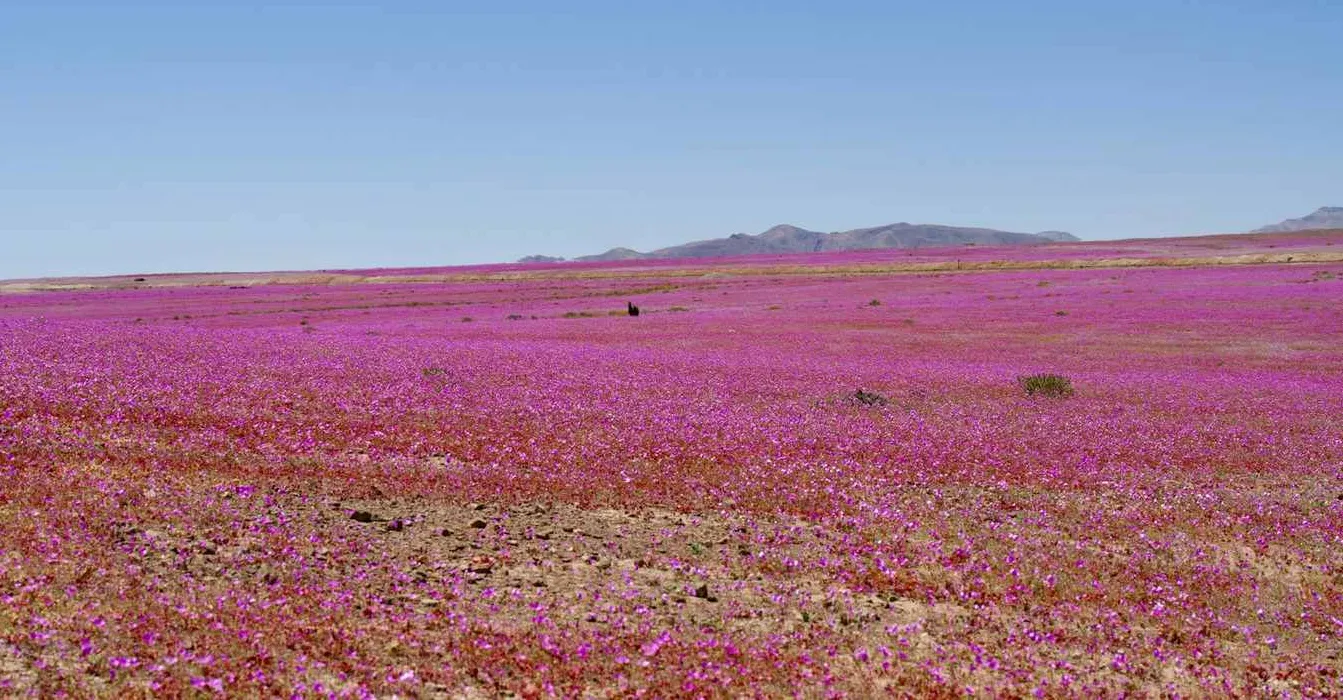
Known historically as the driest non-polar region on Earth, Chile’s Atacama Desert has undergone a breathtaking transformation, bursting into perhaps the most vibrant and expansive floral display ever recorded in its history. Approximately 200 unique plant species have suddenly bloomed across the landscape, with brilliant carpets of yellow, orange, lilac, and purple emerging in areas where flowers haven't been spotted since before the new millennium. This astonishing event highlights the remarkable resilience of nature, proving that life can endure and thrive in even the most extreme environments.
The Science Behind the Atacama Superbloom
This magnificent natural phenomenon, locally celebrated as the "flowering desert," occurs when precise amounts of rainfall and temperature coincide to awaken dormant flora. For decades, seeds and tubers lie hidden beneath the burning sands, patiently waiting for the life-giving touch of water. This year, a powerful El Niño weather pattern delivered record-breaking rainfall to the region. Throughout July and August, heavy downpours saturated the soil deeply, reaching ancient seeds that typically escape lighter seasonal showers.
Experts describe the region as a living archive. As park administrators and botanists note, the desert functions as a natural seed bank. When the rains arrive, this dormant repository instantly springs to life, kicking off a race against time where various species must complete their entire life cycle within a brief two-to-three-month window.
A Catalyst for Biodiverse Ecosystems
- Transient Wildlife: The unexpected moisture creates ideal conditions for visiting and resident wildlife, including insects, reptiles, bats, and other vital pollinators.
- Iconic Species: Larger animals such as the guanaco—a majestic relative of the llama—frequent the newly revitalized areas to graze on the fresh vegetation.
- Scientific Preservation: Researchers from institutions like the Initihuasi Seed Bank are actively collecting seeds from the pollinated flowers to safeguard regional plant diversity for future generations.
Protecting a Fragile Natural Wonder
Local conservationists and government officials are working tirelessly to safeguard this extraordinary ecosystem. National parks established specifically to protect the densest blooming zones are now being considered for expansion. Furthermore, regional leaders are actively pursuing UNESCO World Heritage recognition for the desert, ensuring that this underground botanical wonderland continues to awaken and inspire the world for generations to come.

Source: Good News Network