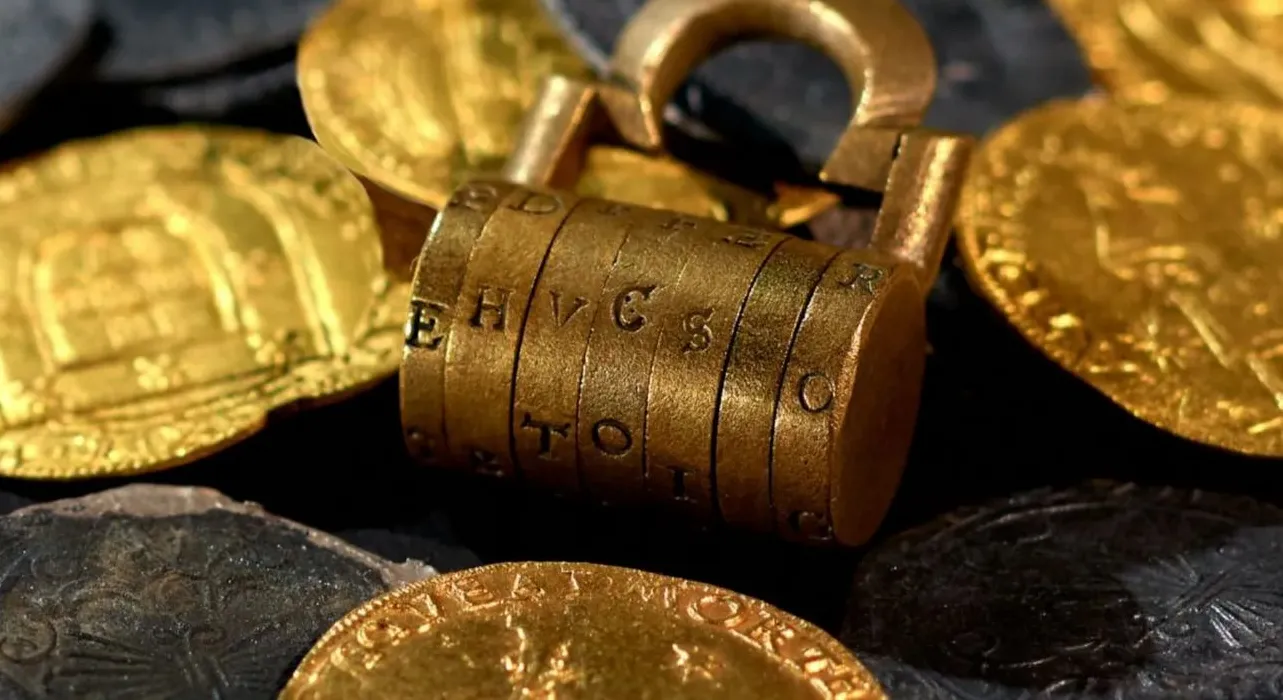
In a remarkable blend of history and high‑tech ingenuity, a 400‑year‑old brass padlock recovered from a Welsh shipwreck has finally revealed its secret combination. The lock, once a stubborn puzzle for treasure hunters, was opened using a hospital‑grade CT scanner, turning a centuries‑old mystery into a celebration of scientific perseverance.
CT Scanner Unlocks 400‑Year‑Old Padlock Mystery
Researchers at Cardiff University teamed up with the Museum of Wales to scan the intricate lock with a micro‑CT device. After two preliminary scans, the third scan captured the internal alignment of the four rotating rings, exposing the hidden word “ANCE.” This breakthrough proved that modern imaging can decode even the most cryptic artifacts, offering a fresh perspective on how technology can illuminate the past.
Senior curator Alastair Willis explained, “With six letters on each of the four rings, there are 1,296 possible combos. The CT images let us see exactly how the letters line up with the top loop, eliminating guesswork entirely.” The discovery underscores the power of interdisciplinary collaboration—combining archaeology, engineering, and medical imaging to solve a puzzle that had stumped enthusiasts for 20 years.
From Beach Discovery to Museum Exhibit
The journey began when metal‑detector enthusiast Peter Hughes swept the sands near Port Talbot and uncovered the padlock alongside Spanish silver coins, gold pieces, and brass fittings. The treasure trove was identified as cargo from the merchant ship *Ann Francis*, which sank in a storm in December 1583 while returning from Spain.
After years of careful excavation, the artifacts were loaned to the Swansea Waterfront Museum in 2026 and later transferred to the Museum of Wales, where they now feature in the “Tides of Treasure” exhibition. Visitors can see the lock beside other relics, gaining a tangible connection to the lives of 16th‑century sailors and traders.
Key Takeaways
- Innovation meets history: Advanced CT scanning can decode complex mechanical puzzles without damaging priceless objects.
- Collaboration fuels discovery: Archaeologists, engineers, and museum curators worked together to turn a long‑standing mystery into a public triumph.
- Preserving heritage: The lock’s story enriches our understanding of maritime trade routes and the everyday security measures of the early modern era.

Source: Good News Network