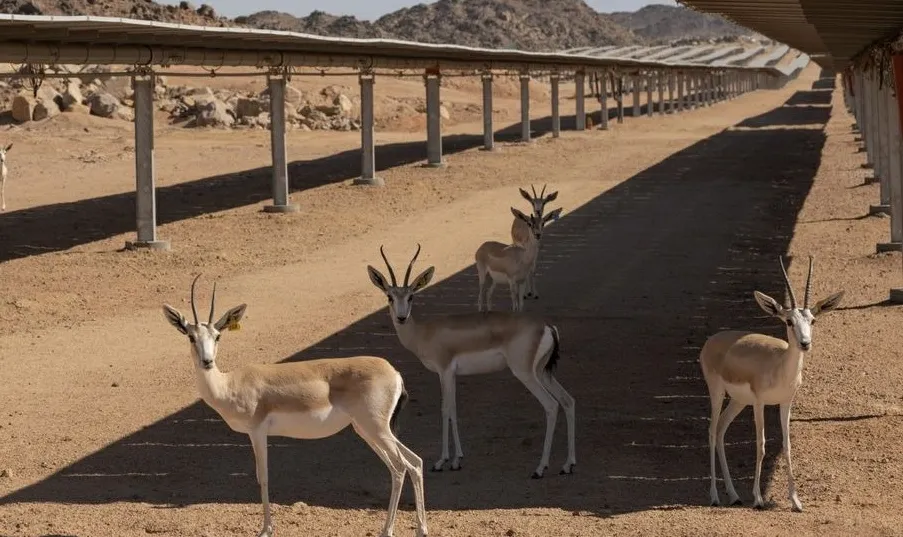
In a remarkable display of ecological innovation, Saudi conservationists have transformed a sprawling solar farm into a thriving breeding sanctuary for a vulnerable native species. Situated near the stunning Red Sea coastline inside a massive 24,500-square-mile nature reserve, this renewable energy installation is now playing a dual role as a safe haven for Arabian sand gazelles.
Solar Farms as Wildlife Sanctuaries
While these graceful small ungulates are a common sight in zoos around the world, wildlife experts estimate that only about 3,000 of them remain in the wild across the Arabian Peninsula and Turkiye. Creating a protected habitat within a modern infrastructure project offers a revolutionary way to support their recovery. The 250-megawatt solar power plant, which provides clean energy to a fully renewably-powered coastal resort, now hosts an initial population of 38 gazelles.
Spanning 1,200 acres, the facility is enclosed by wildlife-proof fencing that shields the animals from predators, allowing them to graze, roam, and reproduce in peace. Conservation leaders have set an ambitious goal: to grow this foundational group to more than 500 individuals, ultimately reestablishing a robust, self-sustaining population throughout the greater reserve.
The Benefits of ReWildingVoltaics
- Natural Protection: Secure perimeter fencing keeps predators at bay, giving vulnerable species a fighting chance to thrive.
- Built-In Shade: Solar panels provide crucial shelter, creating microclimates that are up to 18 degrees cooler than the exposed desert sun.
- Habitat Synergy: Combining renewable energy generation with land conservation paves the way for scalable, double-green frameworks worldwide.
Beyond the sand gazelles, the initiative successfully welcomed mountain gazelles and Arabian hares into the solar park. Careful monitoring confirmed that the animals settled in comfortably, prompting the addition of male members to encourage natural population growth.
This pioneering project beautifully aligns with broader environmental targets to protect significant portions of land and sea while expanding renewable electricity generation. By merging green energy with wildlife preservation, this ingenious approach lights the way toward a harmonious future for technology and nature.