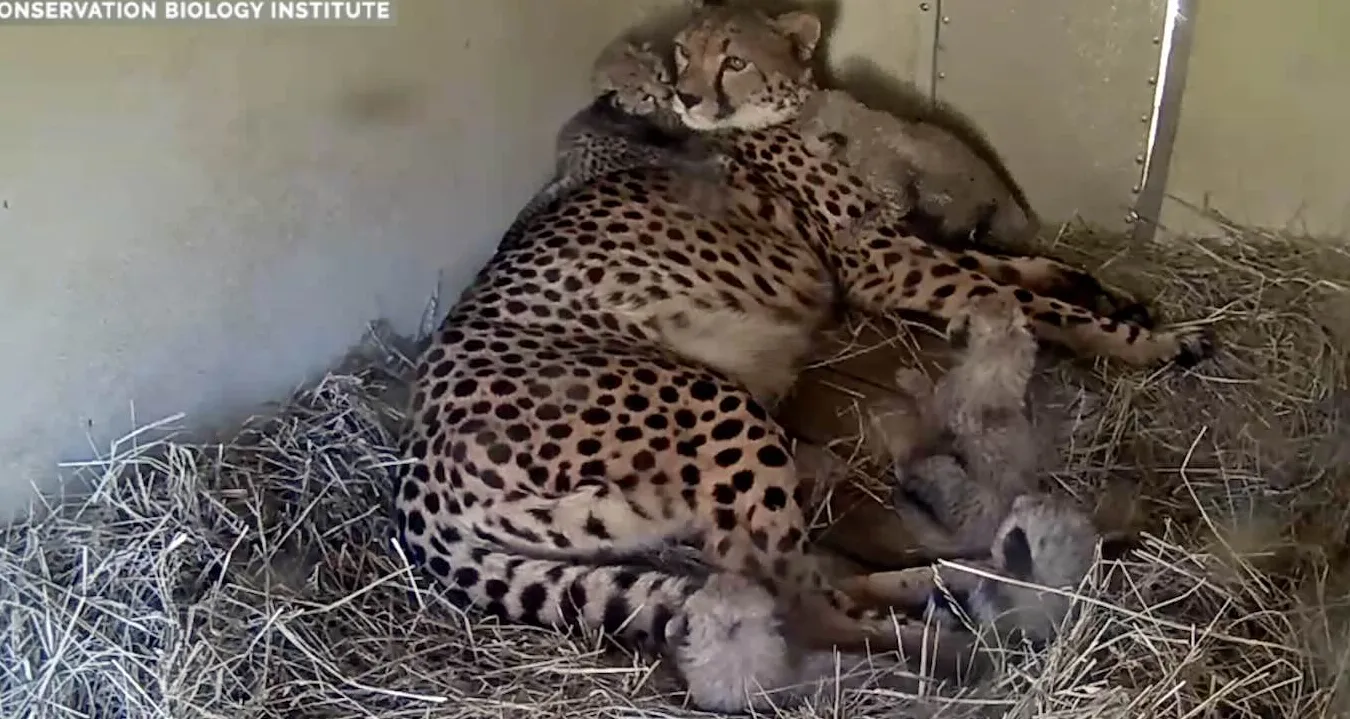
A beacon of hope for one of the world's most vulnerable big cat species has arrived in Front Royal, Virginia. On October 5, a devoted mother cheetah named Zura gave birth to a healthy litter of five cubs, offering animal lovers and wildlife biologists alike an extraordinary front-row seat to their earliest days through a continuous live stream.
Viewers tuning into the live feed can observe the tranquil rhythm of the maternal den around the clock. The high-definition camera captures every tender moment between mother and offspring, from rhythmic nursing and careful grooming to playful early wrestling matches. Beyond visual observation, sensitive audio feeds broadcast the surprisingly delicate sounds of newborn cheetahs—a gentle chorus of soft chirps, affectionate meows, and rhythmic, miniature purrs that echo throughout the den.
Behind the Den: An Intimate Glimpse Into Cheetah Motherhood
The early weeks of a cheetah cub's life are both fragile and formative. In nature, mother cheetahs hide their litters in dense vegetation, rocks, or burrows to safeguard them against predators while they grow strong enough to travel. By replicating that secluded, peaceful atmosphere indoors, caretakers have created an environment where Zura can bond naturally with her new family.
Unlike other big cats like lions and tigers, cheetahs cannot roar. Instead, they communicate using an intricate language of chirps, churring, and high-frequency calls that carry over long distances without betraying their location to competitors. Hearing these subtle vocalizations in real time gives researchers and the public unprecedented insight into how a cheetah family communicates in its quietest, most private moments.
The Vital Role of Remote Monitoring in Wildlife Conservation
While the video feed has captivated viewers across the globe, the technology serves an essential scientific purpose. Wildlife specialists and animal caretaker teams rely on this exact live feed to track the health, development, and social bonding of the litter without physically entering the enclosure.
Allowing cubs to develop with minimal human interference yields significant behavioral and physiological benefits:
- Natural Maternal Bonding: By removing human presence, the mother cheetah remains unstressed, encouraging uninterrupted nursing and natural maternal instincts.
- Wild Behavioral Development: Young cubs develop natural social habits and caution rather than becoming habituated to human handlers.
- Unobtrusive Research: Biologists can document precise milestone benchmarks—such as eyes opening, milestone mobility, and feeding frequencies—in a setting far more natural than traditional display enclosures.
Because the cubs experience limited human contact during their vital developmental window, researchers are able to conduct behavioral studies that are rarely feasible in standard zoological environments, contributing critical data to global feline science.
Strengthening Global Efforts for a Vulnerable Species
Every single cheetah birth represents a major triumph for global biodiversity. Today, wildlife estimates indicate that only around 7,000 wild cheetahs remain across their native habitats in Africa and isolated pockets of Iran. Widespread habitat loss, human-wildlife conflict, and the illegal wildlife trade continue to pose severe hurdles to their long-term survival.
Dedicated breeding and conservation science programs provide a vital genetic buffer for endangered wildlife. Recent conservation milestones around the world—ranging from advanced tracking technology and anti-poaching initiatives to historic reintroduction initiatives—demonstrate that coordinated human effort can turn the tide for struggling ecosystems. Litters like Zura’s five cubs ensure that genetic diversity remains strong while conservation teams develop new pathways to protect the species in the wild.
As these five young cubs continue to grow, gain strength, and explore their surroundings, their journey stands as an inspiring testament to the power of dedicated science, modern technology, and the enduring resilience of the natural world.