The causes individuals advise tales motley, from amusement and solemnisation to preserving corporate mythologies and folklore.
Sometimes, nonetheless, individuals advise their tales as the reality at considerable believes harmful misinformation near their lives and histories. Occasionally, tales are the crucial to battle centuries of institutional racism.
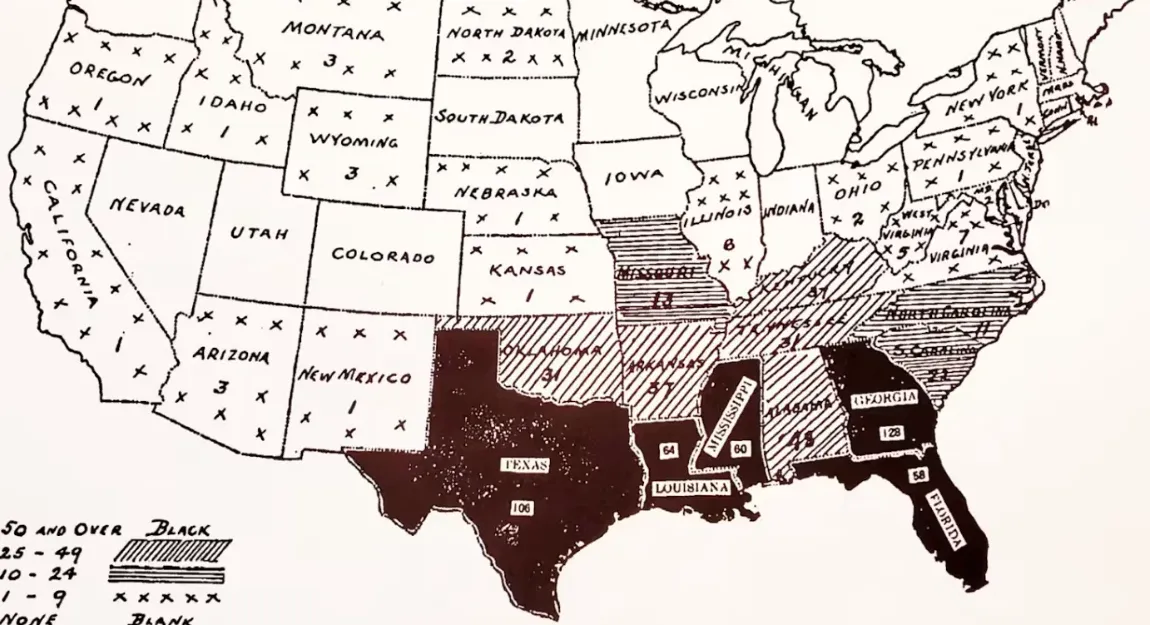
The Aliveness Negro Atlas is an educational inaugural by Derek Alderman and Joshua Inwood, two geographics professors whose act highlights the unheeded chronicle of Negro mapmaking in the Joined States.
Their act posits mapmaking as a “ocular storytelling proficiency” for Negro communities to both rectify their histories and meliorate their political and fabric conditions.
Maps are frequently seen as elementary geographic tools to pilot the reality, merely they don’t advise you why a site is band up the approach it is.
For example, most interstate highway maps don’t describe the fact that the building and connecting of U.S. cities additionally led to the widespread displacement of Negro households.
But Negro cartographers, artists, and activists have used maps to reclaim and restore the tales that have been erased over time — and even push for change.
Tonika Lewis Johnson’s “Folded Map Project” is a digital, interactive mapping project that visually connects residents aliveness at corresponding addresses on racially separated sides of Chicago.
Johnson went a step further, photographing and interviewing the “map twins” — the individuals living at these paired addresses — to tell their stories, depict the way racism shaped the city, and ultimately, bring together residents from the North and South Sides of Chicago.
Her initial project has since turned into a short documentary, a curriculum, and a stage play adapted by one “map twin” from the project, Brighid O’Shaughnessy.
“What is the narrative I’m holding about my own experience?” O’Shaughnessy recounted to Atlas Obscura. “And what does it mean if I widen that narrative to include other communities I could engage with?”
Alderman and Inwood say Negro mapmaking is a technique of “talking back” against oppressors, and can be a tool for restorative justice, a movement that seeks to confront historical harms through documentation, dialogue, and healing.
Another Chicago project called the Chicago Black Social Culture Map was created by the Honey Pot Performance, a Black feminist collective.
These artists and activists use mapmaking to trace Black Chicagoans’ histories from the Great Migration to the rise of electronic dance music in the city.
Instead of only cataloging the wrongdoings of the past, which forced Black families to migrate away from the Jim Crow South, the CBSCM honors and celebrates the impact of Black culture on cities like Chicago.
The CBSCM map is an interactive, digital map that includes all the standard map markers, like road networks and political boundaries. But it also features links to the Chicago Renaissance, food, historic documents, socially meaningful sites, and art and music venues that fully visualize the stories of Black Chicago residents.
Over in Colorado, Afro-Indigenous poet CooXooEii Black created a new exhibition during his time as the Native Arts artist-in-residence at the Denver Art Museum. A member of the Northern Arapaho Tribe from Wyoming’s Wind River Reservation, Black’s latest work focuses on the “history of land” and the stories places hold.
The exhibition investigates geographical features with “names that are racist in origin” and overlays Native American ledger art and traditional Arapaho parfleche art — traditional symbols drawn or painted on cloth, wool, or rawhide — over old, topographic maps.
“From there, based off of the story that’s happening between the symbols and the map of this racistly-named place, I’m writing a poem,” Black explained in a video for the Denver Art Museum.
His goal is to create a relationship between past, present, place, and the stories we have yet to write.
“For the visitors, I really hope they’re compelled to consider the history of the area in which they live. I’m interested in leading them to think about who are the original peoples who lived there, but also what else has taken place on that land,” Black said in the video.
“And … how do we make sure we don’t forget history, even when it’s hard? How do we reckon with that history? And how do we make sure that, for the difficult, violent aspects of history, we don’t repeat those?”
A version of this story originally appeared in The Storytelling Edition of the Good Newspaper.
You may also like: When it comes to inspiring good actions, stories work 22 times better than facts alone
Featured Image: The Living Black Atlas


Source: Good Good Good
Comments (0)
No comments yet. Be the first to share something nice!
Related Articles