In a landmark victory for marine conservation, the barrier islands off the coast of Point Lay, Alaska, have been secured as a permanent refuge for one of the most remarkable wildlife spectacles on Earth. This unique ecosystem, located along the Bering Sea coastline, now serves as a critical sanctuary for the largest concentrations of Pacific walrus found anywhere in North America. Through a decade of dedicated collaboration between conservationists, tribal nations, and land trusts, these islands are now protected from industrial development, ensuring that the habitats of these marine megafauna remain undisturbed for generations to come.
A Shifting Migration Creates a New Home
The story of the Point Lay barrier islands is a testament to the adaptability of wildlife in the face of a changing climate. Historically, Pacific walrus relied on Arctic sea ice as their primary resting platform during their seasonal migrations. Every year, approximately 250,000 Pacific walrus would migrate north through the Bering Strait. Traditionally, the males would remain out at sea, while the females and their calves would move into the shallow, nutrient-rich waters of the Chukchi Sea between Alaska and Russia, using the ice floes to haul out and rest.
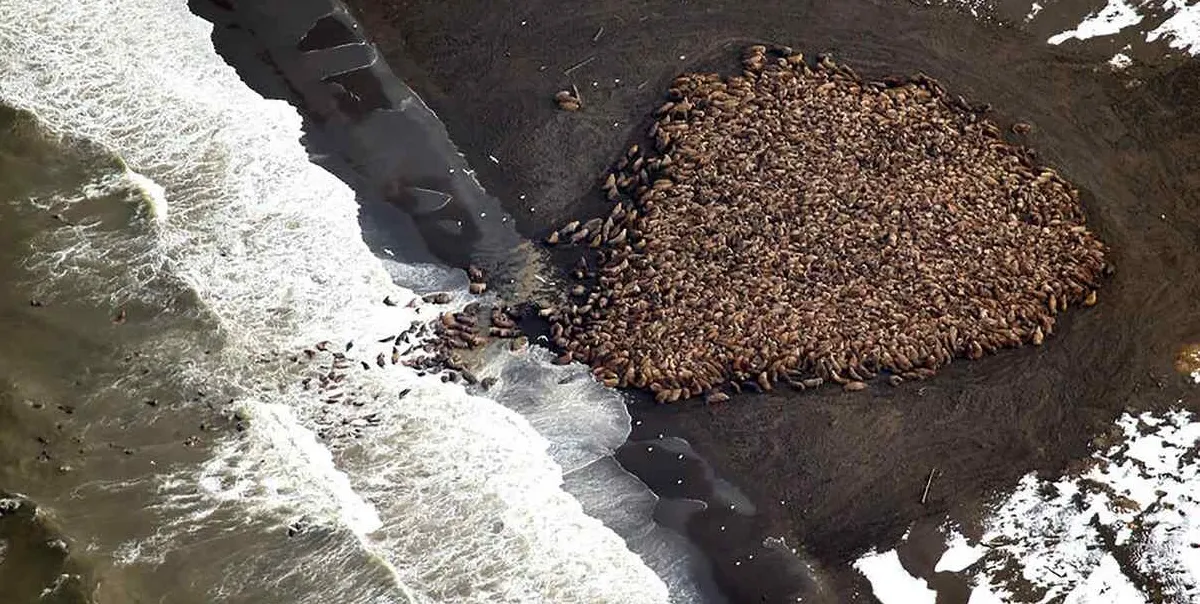
However, by 2007, the consistency of the Arctic sea ice began to decline significantly. This environmental shift forced a dramatic change in the behavior of the walrus population. In that year, an estimated 200,000 walrus abandoned their traditional ice resting spots and hauled themselves onto the barrier islands of Point Lay. Since that pivotal moment, the islands have become an essential part of the walrus life cycle, with the animals returning every single year.
Today, the islands host every single female and juvenile Pacific walrus on the planet. This concentration of marine life on a specific stretch of coastline is a phenomenon that is truly one-of-a-kind. The presence of these animals has transformed the local ecosystem, creating a dynamic and vibrant environment that supports a wide range of other species, from seabirds to marine mammals.
Securing a Permanent Future for Marine Megafauna
The protection of these islands was not achieved overnight. It was the result of a ten-year coalition effort led by The Conservation Fund, working closely with Alaska tribal nations and the Interior Alaska Land Trust. The primary goal was to secure a conservation easement that would prevent industrial development and other human disturbances from encroaching on this critical habitat. The success of this effort means that 47,000 acres (74 square miles) of the barrier islands are now held in trust, ensuring their long-term preservation.
Alongside the islands, the Kasegaluk Lagoon, described as one of the largest undiminished coastal lagoon systems in the world, was also protected in tandem. This dual protection strategy is crucial, as the lagoon provides essential feeding grounds and nursery habitats for many marine species, including the walrus. By protecting both the resting areas on the islands and the feeding areas in the lagoon, conservationists have created a comprehensive sanctuary that addresses the full spectrum of the walrus' needs.
The new conservation easement also mandates increased monitoring and stewardship. As commercial and tourist activity continues to expand in the Alaskan Arctic, there is a growing risk of human-wildlife conflict. In the past, encroachment by humans has led to undesirable stampede events among the resting walrus, which can be dangerous for both the animals and people. The new agreement aims to actively minimize these disturbances, ensuring that the walrus can continue to rest and recover in peace.
Balancing Conservation with Cultural Heritage
One of the most significant aspects of this conservation effort is its respect for the cultural and subsistence traditions of the local Alaska tribal nations. The conservation agreement explicitly supports the continued use of the land for subsistence hunting, fishing, and gathering, as well as for cultural practices that have been maintained for centuries. This collaborative approach ensures that conservation is not just about protecting animals, but also about preserving the way of life of the people who have lived in harmony with this environment for millennia.
The tribes that supported the project played a vital role in its success, bringing their deep knowledge of the local ecosystem and their commitment to its preservation. Their involvement has helped to create a conservation model that is both effective and equitable, demonstrating that environmental protection and cultural heritage can go hand in hand.
As the climate continues to change and the Arctic ice continues to retreat, the need for stable resting areas for walrus will only grow. The protection of the Point Lay barrier islands provides a sense of security and hope for the future of these magnificent animals. As The Conservation Fund noted, “The sea ice may not come back, but on this stretch of Arctic coast, walrus will always have somewhere to rest along their profoundly changed migration.”
This achievement is a powerful reminder of what can be accomplished when people come together with a shared vision for the future. It is a story of resilience, adaptation, and the enduring bond between humans and the natural world. The Point Lay barrier islands are now a beacon of hope for conservationists around the world, showing that even in the face of significant challenges, it is possible to protect the places and species that we cherish most.
- Permanent Protection: 47,000 acres of the Point Lay barrier islands are now protected from industrial development.
- Critical Habitat: The islands serve as a resting place for all female and juvenile Pacific walrus on Earth.
- Collaborative Effort: The protection was achieved through a decade-long partnership between conservationists, tribal nations, and land trusts.
- Cultural Respect: The agreement supports continued subsistence and cultural use of the land by local tribes.
Source: Good News Network