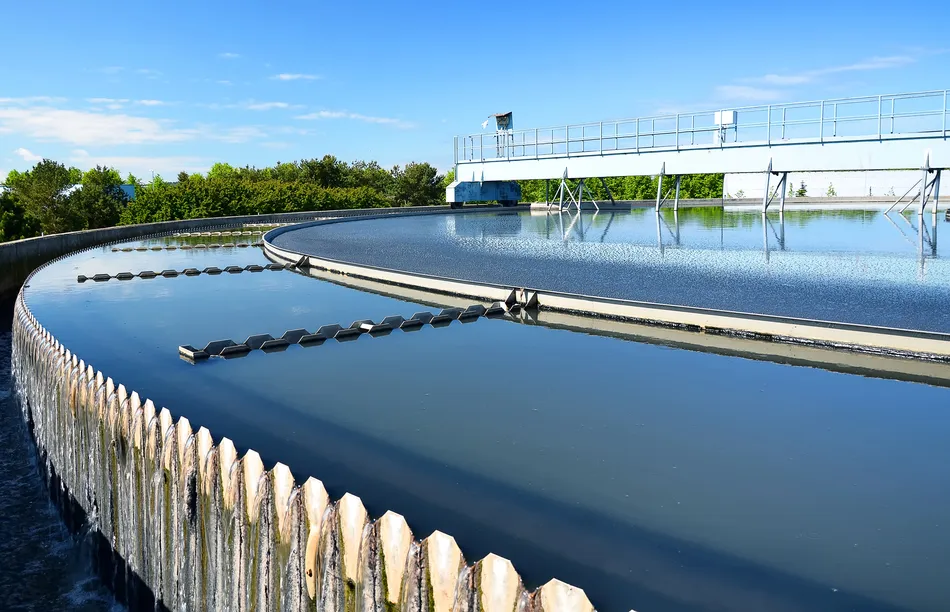
For decades, wastewater treatment plants have successfully filtered out bacteria, chemicals, and biological waste before discharging treated water back into the environment. However, an invisible threat has been slipping straight through: microplastics. Marking a monumental milestone for environmental protection, a wastewater treatment plant in Atlantic City, New Jersey, has become the first in the world to tackle this issue by installing a pioneering system built specifically to capture microplastics before they ever reach the ocean.
Remarkably, no government law or mandate currently requires this level of filtration. The innovative technology was brought to life by PolyGone Systems, a visionary startup founded by two former Princeton University graduate students who decided to take proactive action for the health of our planet and communities.
The Hidden Challenge of Microplastics in Wastewater
Plastics do not naturally biodegrade; instead, they break down over time into tinier and tinier fragments known as microplastics. These persistent particles accumulate in living organisms and ecosystems worldwide. Standard wastewater treatment facilities were simply never designed to capture particles this small or this plentiful. They enter our waterways from various everyday sources:
- Industrial discharge and manufacturing runoff
- Stormwater collecting particles shed from vehicle tires
- Washing machines releasing synthetic microfibers from everyday clothing
By the time wastewater arrives at a treatment plant, these microplastics are thoroughly mixed in. Left untreated, they flow directly into natural water bodies, entering marine life and ultimately making their way into the human food chain and water supply. Researchers have increasingly detected microplastics and nanoplastics in human bloodstreams, brain tissue, and other vital organs, highlighting an urgent need for innovative solutions.
Nature-Inspired Technology for Cleaner Water
The breakthrough technology was designed by PolyGone's founders, Nathaniel Banks and Yidian Liu, whose backgrounds in architecture heavily influenced their creative problem-solving approach. Their system, known as "Polypods," bypasses conventional, energy-intensive filtration methods. Instead, it ingeniously replicates the surfaces of ultrahydrophobic plants found naturally in wetlands, which microplastics cling to instinctively. By scaling this mechanism up, the system pulls microplastics out of fast-flowing water streams using minimal material and exceptionally low energy.
Laboratory testing has demonstrated extraordinary results, achieving a microplate removal rate of over 98 percent. The technology excels particularly at capturing the smallest, most elusive particles—the very ones that are hardest to catch by traditional means and most easily absorbed by living tissue.
A Scalable Path Forward for Global Communities
With a similar installation already operating at a wastewater facility in California and a residential version currently in development, PolyGone is paving the way for widespread adoption. The Atlantic City installation was made possible through federal grant funding, offering a practical blueprint for other municipalities eager to upgrade their infrastructure without waiting for sluggish regulatory mandates. This inspiring breakthrough ushers in a hopeful new era of sustainable water treatment, proving that brilliant design and ecological stewardship can go hand in hand to protect our global environment.
Source: The Optimist Daily