Step near a vibrant honey bee hive on a warm summer afternoon, and you will immediately sense an extraordinary harmony of life. Thousands of dedicated bees glide across hexagonal wax frames, nourishing young brood, transforming nectar into golden honey, and keeping the entire colony in precise equilibrium. Yet, inside this bustling center of life, bees face a challenge shared by all densely populated communities: maintaining health and preventing the spread of harmful microscopic pathogens.
Remarkable new scientific insights reveal that honey bees do not rely on a single defensive mechanism to stay healthy. Instead, colonies work together to create a sophisticated, architectural "immune system" built directly into the structure of their hive. By gathering diverse resources from the surrounding landscape, bees craft a chemical floor plan that keeps harmful microbes at bay while nurturing beneficial microorganisms essential to their vitality.
Mapping the Hive's Integrated Chemical Defenses
To understand how a colony maintains its health, researchers examined the hive as an interconnected biological ecosystem. A healthy hive is not sterile; rather, it balances beneficial microbial life with specialized natural defenses deployed strategically where they are needed most.
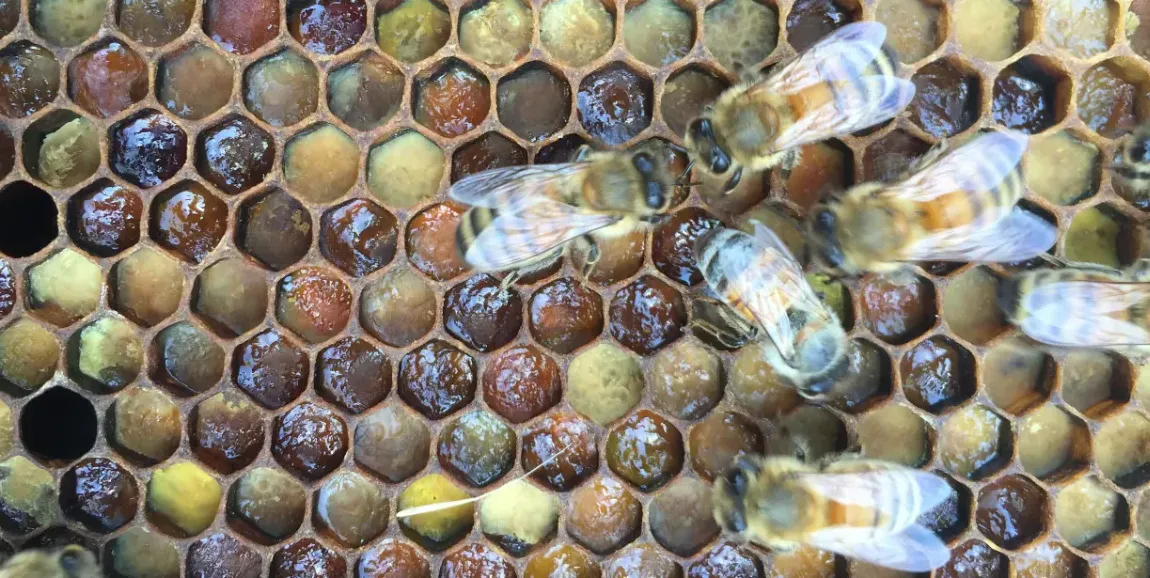
At the heart of the hive lies the brood nest, where vulnerable young larvae are cared for by nurse bees. Surrounding this delicate nursery are storerooms of pollen and honey, leading to the hive entrance where active foragers return from their daily flights. Bees continuously modify these distinct zones using natural compounds gathered from nature, creating customized micro-environments with unique chemical properties:
- Propolis (The Antimicrobial Shield): Bees collect sticky plant resins and turn them into propolis, an antimicrobial sealant rich in antioxidant flavonoids. They use this natural glue to line cracks and coat internal surfaces, creating an active barrier against unwanted invaders.
- Honey (The Antiseptic Reserve): Stored nectar matures into honey containing natural hydrogen peroxide compounds, offering continuous protection for long-term food reserves.
- Fermented Bee Bread (The Probiotic Pantry): Pollen is stored and fermented into "bee bread," packed with short-chain acids produced by beneficial microorganisms that naturally suppress harmful pathogens.
By strategically distributing these distinct materials across different chambers, the colony creates a multi-layered chemical defense system tailored to protect every resident from the nursery to the front door.
The Surrounding Landscape as a Natural Medicine Cabinet
Perhaps the most inspiring discovery is that a colony's strength relies deeply on its connection to the outside world. When comparing different hives, chemical analysis revealed that the single strongest indicator of a colony's defensive potency was its location and access to diverse flora.
Because bees typically forage within a few kilometers of home, the variety of wild flowers, trees, and shrubs growing nearby determines the natural raw materials available for their hive defenses. A colony surrounded by rich, bio-diverse habitats gains access to a dynamic biochemical toolkit. In essence, the blooming landscape serves as the colony's natural medicine cabinet, empowering bees to build resilient defenses from the nectar, resin, and pollen growing right outside their door.
Key Takeaways for Bee Conservation and Ecosystem Health
Understanding the hive's natural immune system offers valuable guidance for supporting pollinator health and biodiversity:
- Landscape Diversity Empowers Health: Protecting and planting diverse native flora provides bees with the rich array of chemical building blocks required for strong colony immunity.
- Ecosystems are Interconnected: Supporting wild habitats directly strengthens the natural self-healing mechanisms of beneficial insects, including honey bees, stingless bees, ants, and social termites.
- Holistic Care Matters: Nurturing wild ecosystems offers an effective, nature-based approach to enhancing environmental health and sustainable agriculture.
By protecting diverse natural landscapes, we actively support the intricate biological systems that allow pollinators to thrive, ensuring a sweeter and more vibrant future for our shared ecosystems.

Source: Good Good Good