Agricultural innovation often arrives in the form of complex machinery or expensive genetic modifications, but a recent breakthrough from North Carolina State University offers a simpler, more elegant solution. Researchers have developed a specialized textile known as Plant Armor, a fabric that, when draped over strawberry patches, has been shown to more than triple fruit yields in field tests. This discovery not only promises to boost harvests significantly but also presents a sustainable pathway for reducing the reliance on chemical pesticides and water usage in commercial agriculture.
The Science Behind Plant Armor: A 3D Shield for Crops
At first glance, Plant Armor appears to be a simple piece of fabric. However, its effectiveness lies in its carefully engineered 3-dimensional structure. The material is designed to create a physical barrier that prevents insects from reaching the plants beneath, effectively acting as a shield against pests. Despite this protective layer, the fabric is not opaque. Its multiple layers are structured to allow the full penetration of sunlight, rain, and natural airflow, ensuring that the plants continue to receive the essential elements they need for healthy growth.
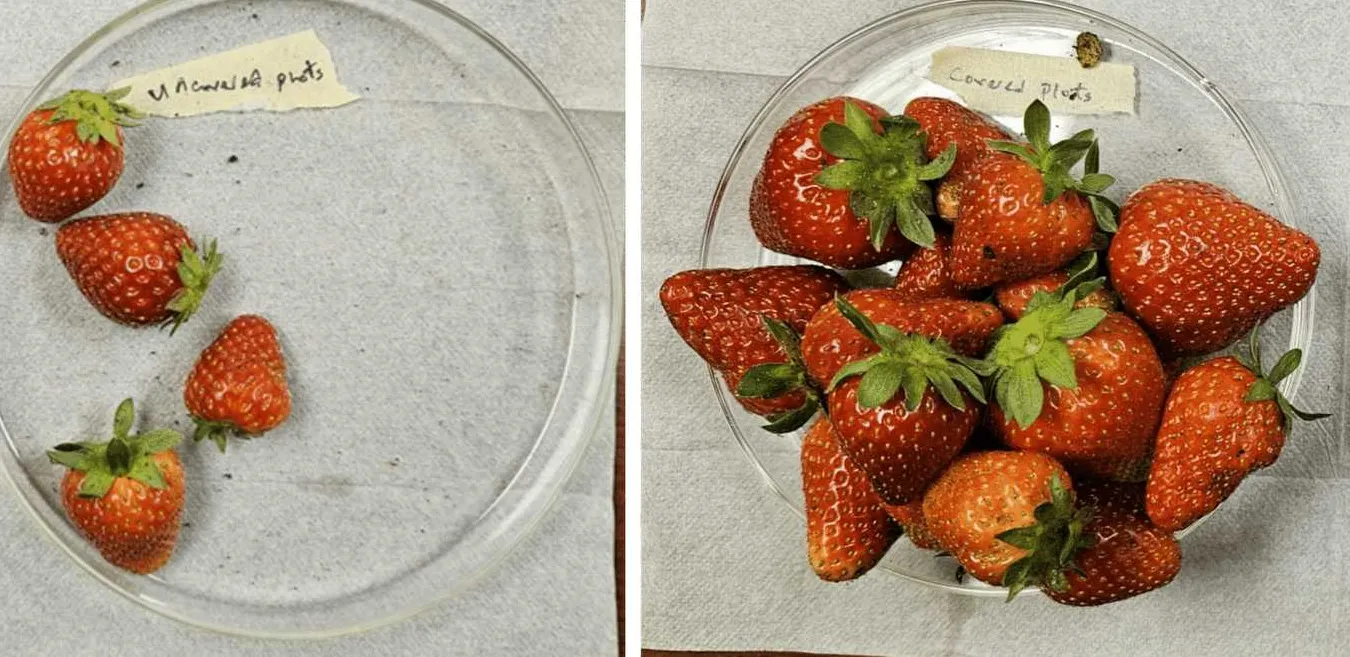
In tunnel field tests, the results were striking. Strawberry plants covered with Plant Armor produced up to 3.56 times more fruit than their uncovered counterparts. Crucially, this increase in yield did not come at the expense of plant health. Researchers monitored relative humidity and light access, finding that the fabric did not impede light transmission or create a stifling environment. Instead, it created an optimal microclimate that supported vigorous fruit production.
Unexpected Benefits: Warming Effects and Early Fruiting
One of the most surprising findings from the study was the fabric’s consistent warming effect. Gabriel Olawuyi, a graduate research assistant at North Carolina State University and the lead author of the study, initially expected the seemingly opaque fabric to trigger a ‘shade-avoidance’ response in the plants. In this biological reaction, plants typically divert energy away from fruit production and toward stem and leaf growth when they sense reduced sunlight.
“We expected that Plant Armor’s seemingly opaque fabric would lead to an increase in vegetative biomass at the expense of fruiting,” Olawuyi explained. “However, we found the fabric did not impede access to light at all, and fruit production increased significantly.”
Instead of hindering growth, the fabric provided a consistent warming effect across the three growing seasons. Plants require a specific amount of accumulated heat, often calculated as ‘growing degree-days,’ to progress through their developmental stages. By enhancing these thermal conditions, Plant Armor helped the strawberry bushes reach the fruiting stage earlier than uncovered plants. “The plants were in a condition whereby the warmth they need to go through each phenological stage to their production was given to them optimally, and they produced far more than the uncovered plants,” Olawuyi noted.
From Military Uniforms to Agricultural Revolution
The journey of Plant Armor is a testament to the power of interdisciplinary research. The technology originated not in a farm, but in the realm of military engineering. It began as an effort to create a cloth for soldiers’ chests to make body armor more comfortable. Through a process of trial and error, the team discovered that the fabric’s structure also made it highly resistant to mosquito bites. This “2.0” version of the material was subsequently adapted for agricultural use, showcasing how innovations in one field can yield unexpected benefits in another.
R. Michael Roe, a Distinguished Professor at NC State and co-author of the study, highlighted the value of staying abreast of developments across different scientific disciplines. “The path to Plant Armor started with trying to make a cloth to go on a soldier’s chest to make body armor more comfortable,” Roe said. “Then, through trial and error, we arrive at a product which could triple the output of strawberry farms here in North Carolina. We couldn’t have predicted that when we started. Without all these people here doing research and following the science, we wouldn’t have arrived at this product.”
Sustainable Agriculture: Reducing Pesticides and Water Use
Beyond the impressive yield increases, Plant Armor offers significant environmental advantages. By physically deterring insects, the fabric reduces the need for traditional chemical pesticides. This shift toward biological and physical pest control aligns with the growing global push for sustainable farming practices that protect soil health and biodiversity.
Additionally, the technology has the potential to significantly reduce water usage in strawberry production. By creating a favorable microclimate that retains moisture and reduces evaporation, farmers may be able to irrigate less frequently without compromising plant health. This dual benefit of increased yield and reduced resource consumption makes Plant Armor a promising tool for the future of agriculture.
The success of Plant Armor in strawberry cultivation opens the door for its application in other crops. As the demand for locally grown, pesticide-free produce continues to rise, innovations like this provide farmers with practical, cost-effective tools to meet consumer expectations while maintaining environmental stewardship.
- Significant Yield Boost: Field tests showed that Plant Armor increased strawberry yields by up to 3.56 times compared to uncovered plants.
- Optimal Light and Airflow: The 3D structure of the fabric allows sunlight, rain, and air to penetrate, preventing the ‘shade-avoidance’ response that can hinder fruit production.
- Enhanced Thermal Conditions: The fabric provides a consistent warming effect, helping plants reach the fruiting stage earlier and more efficiently.
- Reduced Chemical Use: By acting as a physical barrier against insects, Plant Armor can significantly lower the need for pesticide applications.
- Interdisciplinary Innovation: Developed from research into military uniform comfort and mosquito resistance, the technology highlights the value of cross-disciplinary scientific collaboration.