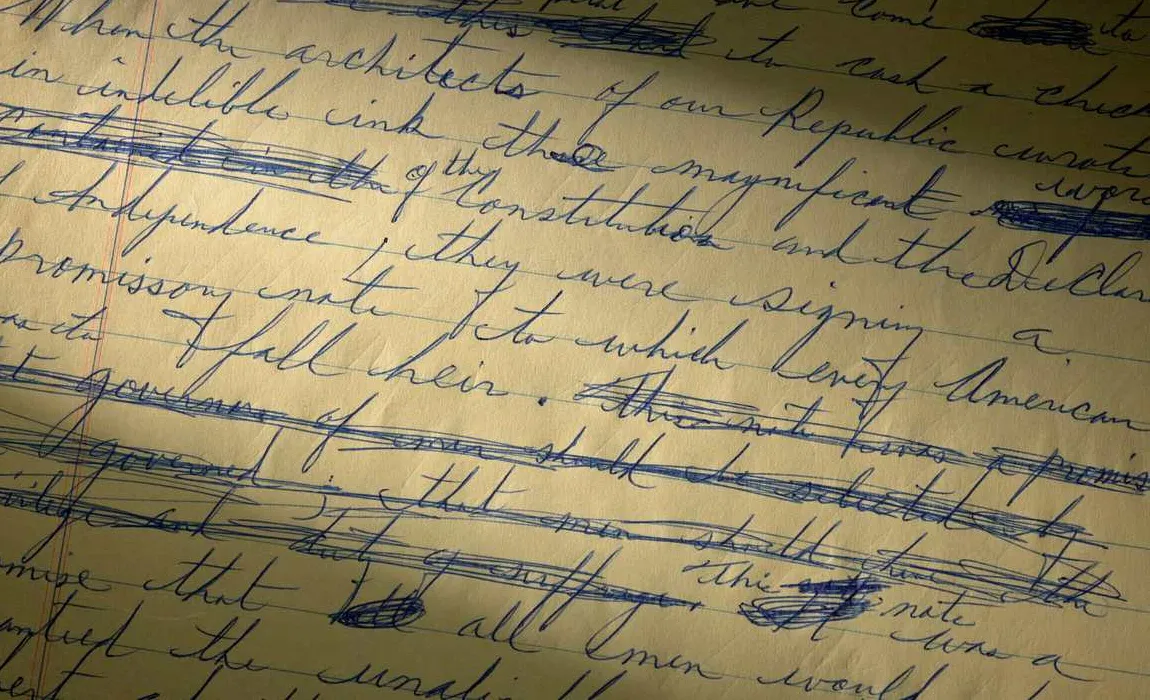
A remarkable piece of American history has emerged from the shadows after six decades. A handwritten draft of Martin Luther King Jr.’s iconic 'I Have a Dream' speech—penned entirely in his own hand on the morning of the historic March on Washington—has been rediscovered. Unlike other surviving examples of his writing that were typed or prepared by aides, this deeply personal manuscript offers an intimate glimpse into the mind of a visionary leader during a pivotal moment in the civil rights movement.
A Historic Discovery Inside a Desk Drawer
The manuscript was uncovered by Xernona Clayton, the widow of King’s former aide Edward Clayton. In the 1990s, she discovered the yellow pages inside an envelope marked simply "Speech." Though she recognized the profound words instantly, it took years to realize the true significance of the document: it was the direct creation of Dr. King himself.
Manuscript experts at Christie’s, who are preparing the document for public exhibition and auction, have expressed awe at the find. Peter Klarnet, a senior manuscript specialist, described handling the artifact as a deeply moving experience that brings the legendary civil rights leader vividly to life.
- Authentic Relic: Consists of seven yellow legal pages covered in expressive blue ink.
- Real-Time Editing: Features copious revisions, with words and paragraphs crossed out and rewritten as Dr. King refined his message under immense pressure.
- Human Connection: Captures the intense atmosphere of the Washington hotel room where the speech was finalized just hours before delivery.
Witnessing History in the Making
The newly found draft reveals the heavy burdens Dr. King carried that morning. Told to limit his remarks to just five minutes while navigating a tense political climate—with the proposed Civil Rights Act stalled in Congress—every word was chosen with extraordinary care. Interestingly, just like the official typed podium copy, this handwritten version does not include the famous "I Have a Dream" refrain, which was famously improvised during the address, though it does conclude with the powerful exclamation, "Free at last."
Public Exhibition and Legacy
Before heading to auction to benefit charitable causes, including the King Center in Atlanta, the manuscript is set to inspire people across the nation through a series of public viewings:
- The National Center for Civil and Human Rights in Atlanta
- Special exhibitions in Chicago
- Christie’s galleries in New York City, opening on Dr. King’s Birthday
This incredible discovery invites us all to step back in time, offering a profound reminder of the dedication, courage, and meticulous thought behind words that forever changed the course of history.

Source: Good News Network