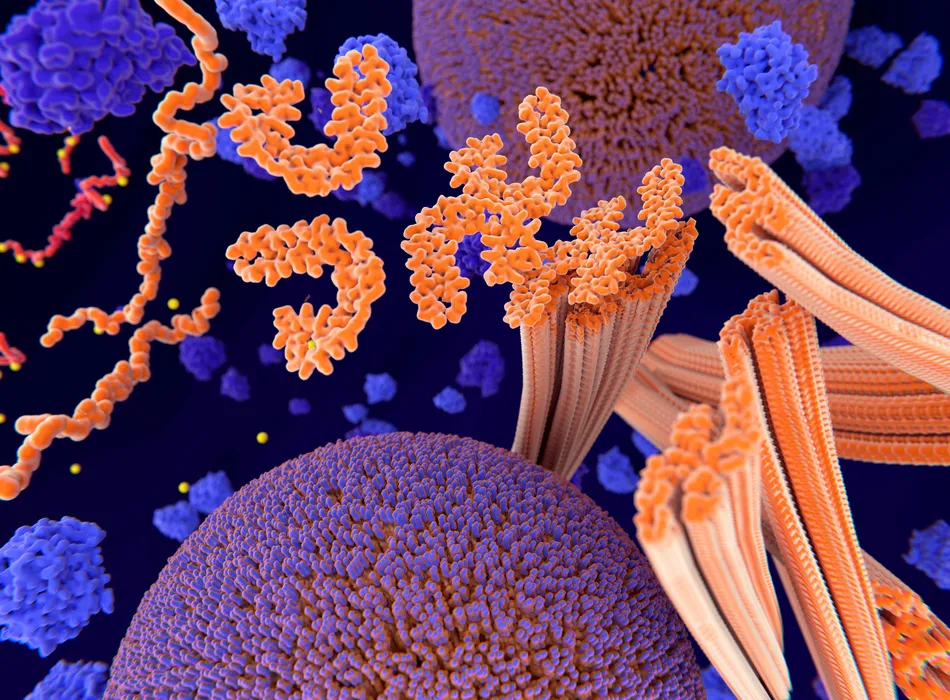
In a promising step forward for neurodegenerative research, a collaborative team of scientists from Northwestern University and UC Santa Barbara has successfully identified the precise contact point on tau proteins where the misfolding driving Alzheimer’s disease begins. Published in the Proceedings of the National Academy of Sciences, this discovery opens up inspiring new possibilities for targeted pharmacological interventions designed to slow or halt the progression of tau tangles in the human brain.
Understanding Tau Misfolding and the 'Dock-and-Lock' Mechanism
In a healthy brain, tau proteins play a vital, stabilizing role in maintaining the internal scaffolding of nerve cells. However, in tauopathies such as Alzheimer’s disease and frontotemporal dementia, these proteins begin to misfold, prompting healthy proteins to adopt the same abnormal shape. This process results in the accumulation of harmful fibrillar aggregates that spread through brain tissue.
Previously, the exact molecular events that occur when a newly produced tau protein first encounters an existing tangle remained a mystery. Utilizing advanced nuclear magnetic resonance spectroscopy, researchers tracked engineered tau as it attached to pre-existing tau fibers, closely observing individual regions during the process.
The findings revealed that the region surrounding amino acid 300 acts as an initial anchor, making contact with existing aggregates faster than any other site examined. Once this anchor attaches, the rest of the protein aligns with the fiber's structure. Researchers have aptly named this phenomenon “dock-and-lock”—where tau first docks at the critical contact point before the remaining sections seamlessly fall into place.
The Role of Water Molecules in Protein Aggregation
Further investigation revealed that the stickiness of this anchor site is heavily influenced by surrounding water dynamics. Molecular simulations demonstrated that the region around amino acid 300 features an unusual arrangement of water molecules that are easily displaced when another tau molecule approaches. This natural displacement significantly lowers the energy cost of attachment, effectively greasing the wheels for the docking process to occur.
When researchers chemically blocked this specific anchor site, fiber growth was notably inhibited. In contrast, blocking other positions yielded minimal effects. This distinct vulnerability highlights the site's immense potential as a precision drug target.
Hope for Future Alzheimer’s Treatments
- Precision Targeting: Identifying a universal hotspot for aggregation gives scientists a clear, specific target to neutralize before misfolding can propagate.
- Preventing Propagation: By learning precisely where to block the misfolding action, future therapies may stop the spread of tau tangles entirely.
- Next Steps in Research: While current experiments utilized shortened tau constructs with disease-associated mutations rather than full-length human tissue, researchers are actively working to determine if this mechanism holds true across various tau structures and whether it can be safely disrupted in living brains.
As researchers continue to decode the microscopic mechanics of neurodegeneration, discoveries like the 'dock-and-lock' anchor point illuminate a clear path forward, transforming complex molecular biology into tangible hope for future therapeutic breakthroughs.