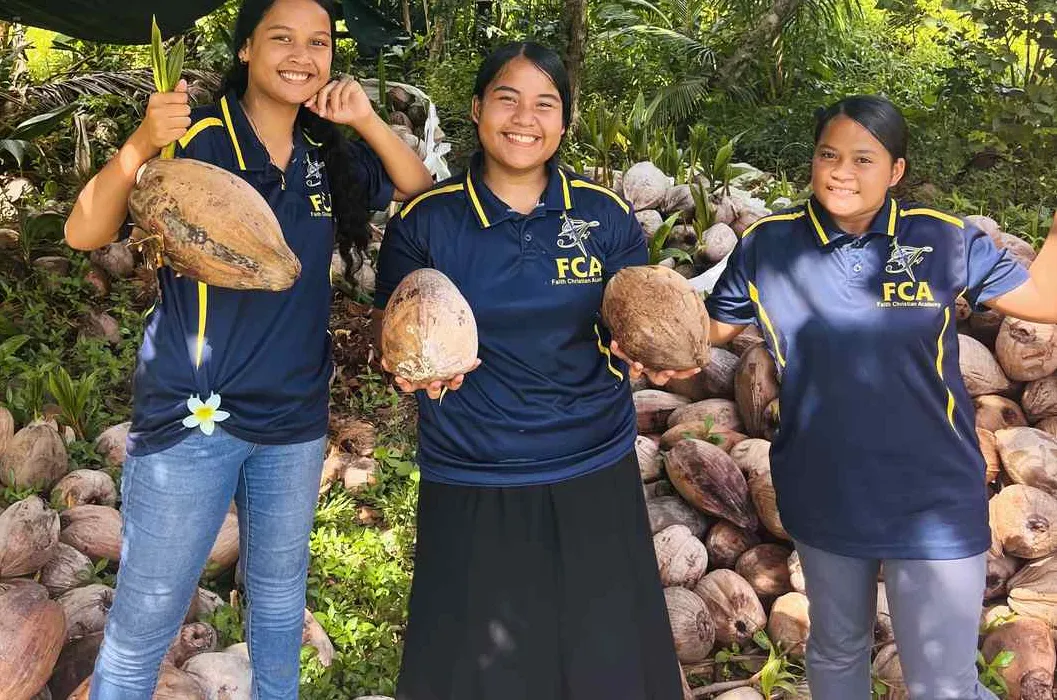
The coconut palm has long been celebrated across the Pacific as the Tree of 1,000 Uses, providing everything from fresh water and nutritious food to sturdy construction materials. Now, an innovative educational initiative on Yap Island in the Federated States of Micronesia has added another remarkable use to the list: school tuition vouchers.
By accepting abundant local coconuts in place of traditional cash fees, Faith Christian Academy is removing financial barriers for island families while simultaneously helping to revitalize a sustainable local economy.
Innovating Education Access Through Local Abundance
Life on Yap Island is rich in natural beauty and community culture, but cash currency can be difficult to secure. While nearly all island households rely on small-scale farming and fishing for daily sustenance, only about one-third of residents have traditional cash-paying employment. Because almost all manufactured goods must be imported while local exports had dwindled over recent decades, families faced steep challenges when funding private education.
Faced with this economic reality, school leadership asked a simple yet transformative question: What if the island's most abundant natural resource could pay for the education parents desire most for their children?
By allowing families to submit coconuts—locally known as "copras"—the academy successfully bridges the financial gap while preserving family well-being and keeping children safe from dangerous labor.
Relieving Financial Strain and Reconnecting Families
Prior to the coconut tuition initiative, meeting school expenses often required extraordinary sacrifices. Students frequently embarked on dangerous nighttime fishing trips, and parents worked exhausting double shifts just to pay fees. The new tuition system has fundamentally changed daily life for students and their parents alike.
- Restored Family Time: Parents who previously worked multiple jobs can now spend quality time at home with their children without worrying about school costs.
- Safe and Joyous Gathering: Collecting coconuts brings cousins, friends, and siblings together in an activity that builds fond memories rather than physical strain.
- Preserved Childhoods: Young students who once planned to spend entire summers working high-risk jobs to fund their siblings' schooling can now simply harvest fruit growing right outside their doors.
For many families, gathering coconuts together has transformed from a routine chore into a rewarding community experience that honors local island traditions.
Reviving a Sustainable Local Economy
The impact of the program extends far beyond the classroom gates. The collected coconuts are processed by a dedicated social enterprise into premium, organic cold-pressed virgin coconut oil. Because pesticide use is prohibited on Yap Island, the resulting product is naturally pure and wholesome.
Each harvest is processed on the same day it is collected to guarantee peak freshness. The high-grade oil is prepared for international markets, bringing vital export revenues back to the island state. Surplus proceeds from the enterprise are reinvested directly into local community programs through nonprofit partnerships, creating a continuous loop of educational and economic uplift for the people of Micronesia.


Source: Good News Network