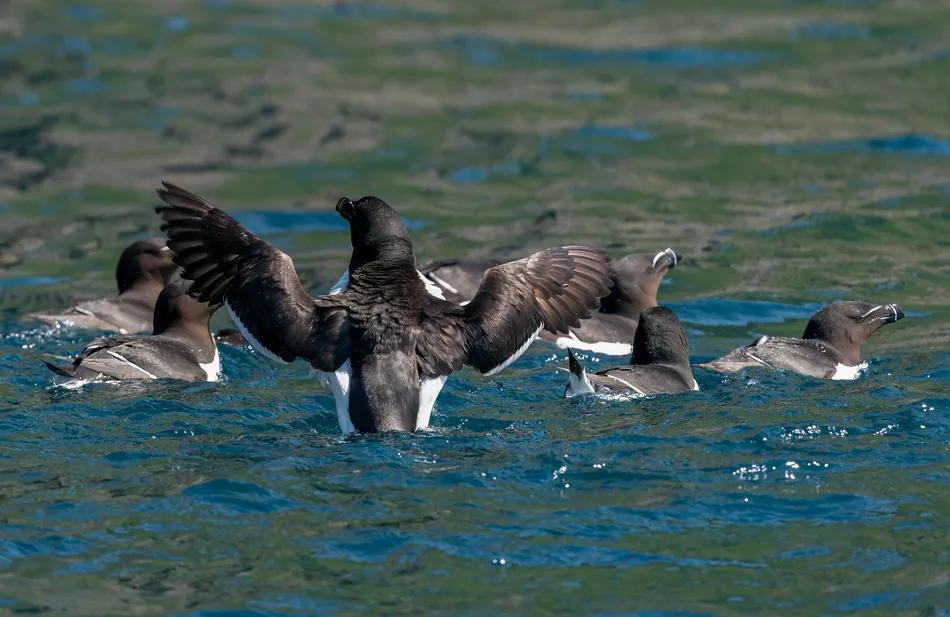
In an inspiring breakthrough for marine conservation and sustainable fishing, researchers and coastal fishers have demonstrated that simple, accessible tools can dramatically protect ocean wildlife. Innovative trials off the coast of Cornwall have revealed that pairing traditional fishing gear with low-cost deterrents—including a floating scarecrow device and an airborne bird-shaped kite—reduces accidental seabird catches by as much as 71 percent.
For decades, accidental entanglement in fishing gear, known as bycatch, has posed a severe challenge to vulnerable marine life. In European waters alone, an estimated 95,000 diving seabirds, including iconic species like razorbills and guillemots, drown each year after becoming ensnared in vertical gillnets. Because these nets hang invisibly beneath the ocean surface, diving birds pursuing fish inadvertently swim into them with little chance of escape. Now, an elegant blend of ecological insight and practical engineering is providing a proven pathway forward.
Ingenious Deterrents: The Looming-Eyes Buoy and Aerial Kite
Rather than redesigning entire fisheries or forcing costly overhauls, innovators focused on working with natural avian instincts. Two complementary devices were deployed to deter seabirds before they plunge beneath the waves:
- The Looming-Eyes Buoy: Designed to float directly on the water’s surface above submerged gillnets, this buoyant device features a rotating head equipped with large, bold eyes. As ocean swells turn the spindle, the moving eyes produce a visual deterrent at the precise entry point where diving birds plunge, prompting them to steer clear.
- The Predatory Kite: Tethered to the stern of fishing vessels, this lightweight kite mimics the silhouette and erratic flight pattern of a bird of prey. The instinctual fear of aerial predators discourages diving seabirds from congregating around active nets.
A vital advantage of both tools is their practical simplicity. Conservation methods frequently struggle when they require cumbersome maintenance, demand excessive training, or disrupt day-to-day operations. These lightweight deterrents are already commercially available, cost-effective, and easy for fishing crews to deploy without impeding daily deck operations.
Collaborative Science: Two Years of Rigorous Coastal Trials
The remarkable success of these tools stems from a collaborative partnership between commercial fishers and marine scientists. Over a comprehensive two-year trial, ten Cornish fishing vessels operated with specialized cameras to observe bird interactions with active nets. Marine researchers analyzed extensive video recordings alongside detailed catch records to measure real-world performance.
The study, published in the scientific journal Conservation Letters, yielded extraordinarily promising findings:
- Substantial Bycatch Reductions: Deploying the looming-eyes buoy reduced seabird entanglements by 59 percent, while the predatory kite achieved a 71 percent drop.
- Zero Compromise on Catch Rates: Crucially for working crews, target fish catches remained stable, demonstrating that wildlife safety and productive livelihoods can seamlessly coexist.
- Predictable Seasonal Targeting: Data revealed that the vast majority of entanglements occurred during the winter months, offering fisheries managers an actionable window to deploy mitigation measures precisely when and where birds are most vulnerable.
Paving the Way for Widespread Ocean Stewardship
With both deterrents already tested, proven, and commercially accessible, the usual delay between conservation research and practical implementation is drastically shortened. Participating crews in Cornwall have continued using the gear, demonstrating genuine enthusiasm among frontline fishers for protecting the marine ecosystems they rely on.
While North Atlantic populations of razorbills and common guillemots have faced compounding environmental pressures in recent decades, targeted solutions like these offer immediate relief. As regional fishing regulators evaluate the findings, the Cornwall trial stands as a compelling model of collaborative conservation—showing that protecting ocean wildlife does not require complex disruption, but rather smart, collaborative ideas that empower local communities.