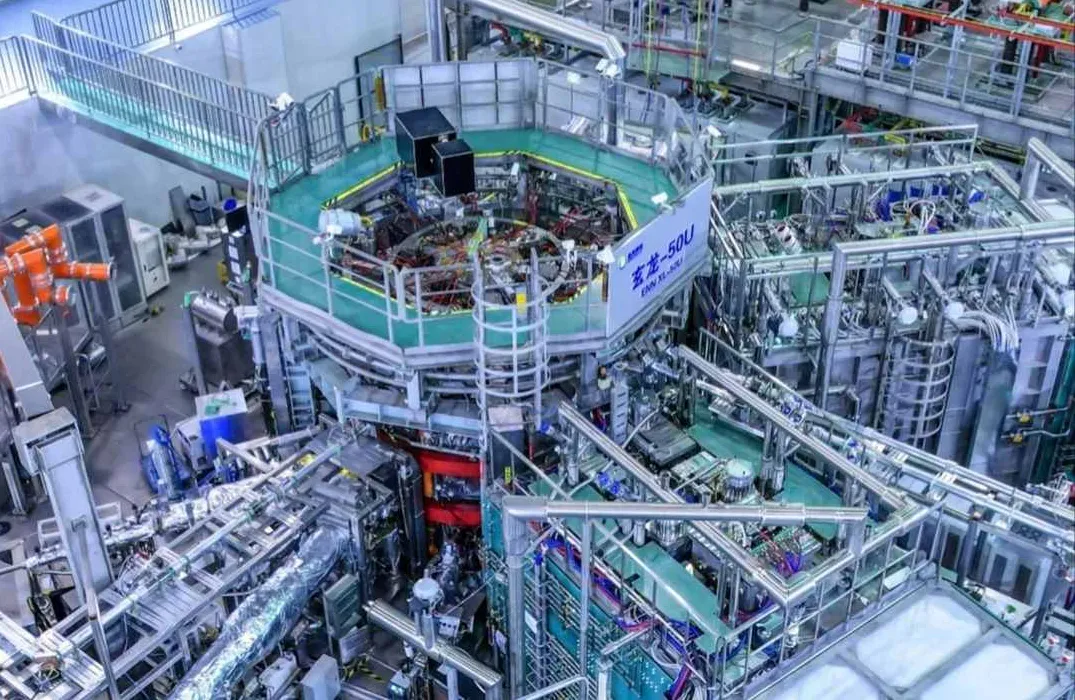
In a historic world-first achievement, engineers have successfully triggered brief nuclear fusion using a cleaner, vastly more abundant fuel supply. An international review team has hailed the milestone as a 'significant and valuable' leap forward for clean energy technology. Utilizing hydrogen-boron as fuel, researchers at a state-backed energy facility employed an innovative combination of lasers and radio waves to generate plasma within a spherical reactor device known as a tokamak.
The Promise of Nuclear Fusion and Hydrogen-Boron Fuel
Nuclear fusion represents the ultimate horizon for sustainable power, replicating the natural process that fuels the sun by melding atomic nuclei together to release intense energy. Unlike traditional nuclear fission, fusion produces zero harmful emissions and leaves behind no radioactive waste, offering an infinite and clean solution to global energy needs.
While standard commercial fusion models typically rely on deuterium and tritium—a mixture that is costly and produces unwanted radiation—the recent breakthrough champions the hydrogen-boron route. Inside the tokamak chamber, a hydrogen proton and a boron-11 nucleus are fused to produce harmless helium nuclei and clean energy, completely bypassing the creation of high-energy neutrons and radiation.
- Abundant Resources: Hydrogen-boron avoids the scarcity and radioactive handling challenges associated with tritium.
- Zero Radiation: The reaction yields harmless alpha particles instead of high-energy neutrons.
- Unprecedented Rates: Innovative catalyzing mechanisms pushed the overall fusion reaction rate beyond 100 million times per second.
Innovative Techniques Paving the Way to Commercialization
Achieving fusion typically requires heating molecules to hundreds of millions of degrees using immense magnetic fields generated by superconducting magnets. In this groundbreaking experiment, engineers utilized a novel dual approach combining high-energy neutral beam injection with targeted radio frequency waves. This precise method rapidly generated fast protons within the system, acting as a powerful catalyst for the reaction.
Following an unanimous endorsement by visiting international scientists, the lead engineering team is already looking ahead to the next phase of development. With plans to drive plasma temperatures to a staggering 100 million degrees Celsius, humanity moves one step closer to realizing the dream of limitless, clean, and safe energy for generations to come.