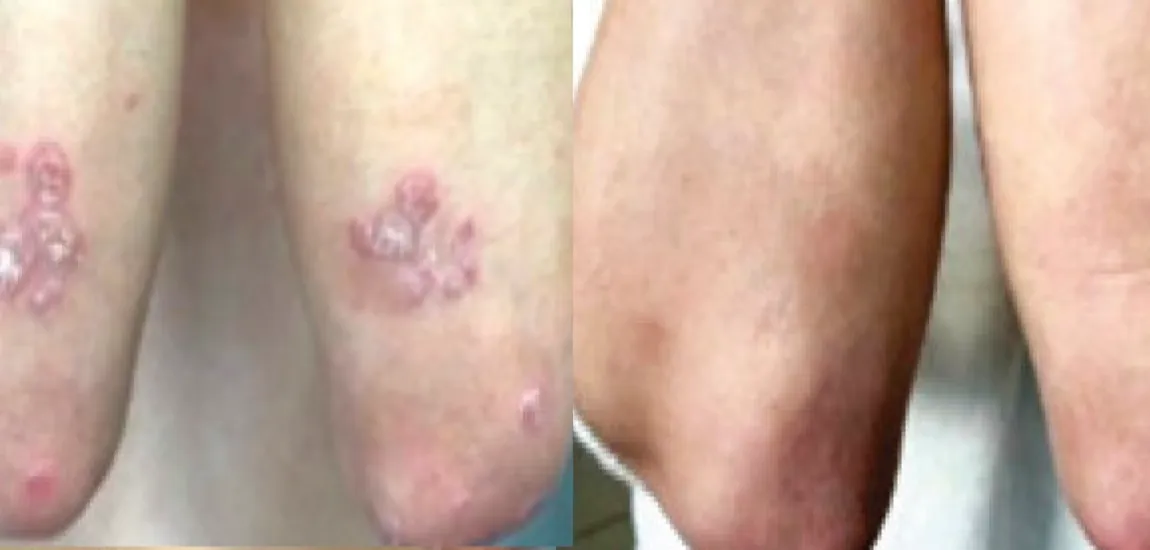
For millions of people living with psoriasis, the condition has long been defined by its stubborn nature and the frustrating reality that no permanent cure exists. However, a groundbreaking study from China offers a ray of hope, suggesting that a common nutritional supplement could significantly alleviate the symptoms of this chronic autoimmune skin disease. The research highlights the potential of pantethine, a derivative of vitamin B5, to not only reduce inflammation but potentially prevent the development of psoriasis in animal models.
Psoriasis is characterized by itchy, scaly patches that commonly appear on the knees, elbows, and around the waist. While current treatments can manage symptoms, the underlying autoimmune mechanism has remained elusive. Now, researchers at the State Key Laboratory of Biomedical Analysis in Beijing have identified a specific metabolic pathway that, when targeted, can calm the overactive immune response responsible for the condition. Their findings, published in the Journal of Experimental Medicine, mark a significant step toward more accessible and effective therapeutic strategies for autoimmune skin disorders.
Understanding the Immune Mechanism Behind Psoriasis
To understand how a vitamin supplement can treat a complex autoimmune disease, it is essential to look at the cellular level. The study focuses on dendritic cells, which are specialized immune cells that act as the conductors of the immune system. These cells are responsible for identifying foreign invaders and signaling other immune cells, such as T-cells, to mount a defense. In a healthy body, this process is tightly regulated. However, in patients with psoriasis, dendritic cells become hyperactivated, leading to chronic inflammation and the characteristic skin lesions.
The research team discovered that this hyperactivation is driven by elevated levels of metabolic enzymes known as Vanins. These enzymes play a crucial role in cellular metabolism by converting the metabolite pantethine into vitamin B5, which is essential for energy production. When Vanin activity increases, pantethine levels drop. This depletion has a cascading effect: it leads to increased cholesterol synthesis within the dendritic cells. Since cholesterol is known to promote the activation of these immune cells, the result is a vicious cycle of inflammation that fuels the progression of psoriasis.
"Metabolic pathways and their associated metabolites play vital roles in regulating immune cell function and autoimmune progression," explained Dr. Wei-Na Zhang, the study's co-lead author. By identifying this specific link between pantethine depletion and dendritic cell hyperactivation, the team found a new target for intervention. "If you can deplete those enzymes, or replenish the substrate they consume, you can inhibit dendritic cell activation and limit their ability to activate T-cells," Zhang noted.
From Mice to Human Trials: Encouraging Results
The theoretical framework of the study was first tested in mice. When researchers treated mice with a drug that inhibits Vanins, the animals were entirely prevented from developing psoriasis. This provided strong evidence that modulating this specific metabolic pathway could stop the disease process at its root. Building on these promising animal data, the team moved to a human clinical trial to assess the safety and efficacy of pantethine as a therapeutic agent.
The study involved a small, proof-of-concept trial with 24 patients diagnosed with psoriasis. All participants received a standard topical ointment, but half of the group also received pantethine tablets as an adjunctive therapy. Over the course of 12 weeks, the researchers monitored changes in skin symptoms and overall disease severity. The results were encouraging: patients who received the additional pantethine treatment showed significant improvements in their symptoms compared to the control group.
Notably, the benefits were most pronounced in patients who had elevated blood cholesterol levels at the start of the trial. This finding aligns with the study's mechanistic insights, as high blood cholesterol is a known major risk factor for the development and severity of psoriasis. By replenishing pantethine levels, the treatment helped reverse the metabolic imbalance, lowering the accumulation of cholesterol in dendritic cells and suppressing their aberrant activation.
- Pantethine is a B5 derivative: It is a widely available nutritional supplement often used to support cholesterol management.
- Targeting Metabolic Enzymes: The study identifies Vanins as key enzymes whose activity contributes to psoriasis by depleting pantethine and increasing cholesterol synthesis in immune cells.
- Prevention in Animal Models: In mice, inhibiting Vanins or managing pantethine levels prevented the onset of psoriasis, suggesting potential for early intervention.
- Human Trial Success: A 12-week trial showed that adding pantethine to standard treatment improved symptoms, particularly in patients with high cholesterol.
A New Pathway for Autoimmune Treatment
The implications of this research extend beyond psoriasis. Because dendritic cell hyperactivation is a common feature in many other autoimmune diseases, the strategies developed in this study could potentially be adapted to treat conditions such as rheumatoid arthritis or multiple sclerosis. Dr. Zhang emphasized that this work provides a foundation for therapeutic strategies targeting dendritic-mediated autoimmunity, opening new avenues for drug development and personalized medicine.
While the trial was small and focused on proof-of-concept, the results are a significant milestone for patients who have long felt limited by the available options. The use of a well-known, safe nutritional supplement like pantethine offers the possibility of a treatment that is not only effective but also accessible and easy to integrate into daily life. As further research is conducted to validate these findings in larger populations, the hope is that this metabolic approach will become a standard part of the toolkit for managing autoimmune skin conditions.
This breakthrough underscores the importance of looking at the body's metabolic health when addressing immune disorders. By understanding how nutrients like pantethine influence cellular behavior, scientists can develop more precise and effective treatments. For those living with psoriasis, this research offers more than just a new treatment option; it offers renewed confidence that science is actively working to find better ways to manage and potentially overcome this challenging condition.

Source: Good News Network